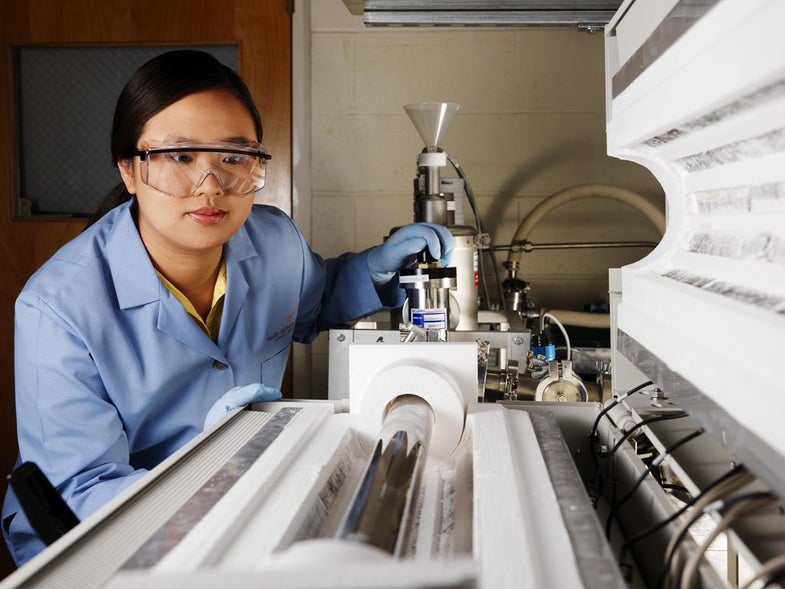
Graphene-Enhanced Batteries Pacific Northwest National Laboratory scientist Jie Xiao prepares to test lithium ion batteries. The laboratory is working with a Princeton University spinoff firm to develop and commercialize graphene-enhanced Li-ion batteries. PNNL

Here's a new solution for the impatient gadget geek: graphene-enhanced batteries that can charge your cell phone and power tools in minutes, not hours.

The Pacific Northwest National Laboratory is working with a private firm to develop and commercialize lithium-ion battery electrodes using "Vor-x," a proprietary graphene material invented at Princeton University.

Adding small amounts of high-quality graphene to a Li-ion battery can improve its power and cycling stability without sacrificing high storage capacity, according to Vorbeck Materials, which produces the graphene. Typically, you have to choose between high capacity and quick charging ability.

Vorbeck last year became the first company to commercialize a graphene product, offering graphene-based conductive ink for use in printed electronics. The firm spun out of graphene research conducted in Princeton's Ceramic Materials Laboratory, run by Ilhan Askay, who co-invented Vor-x.

Materials scientists are tinkering with several ways to improve the storage capacity, charging/discharging speed, and safety of Li-ion batteries, but graphene battery electrodes is a new step.

Li-ion batteries work by transferring lithium ions between a cathode and an anode using a liquid electrolyte. Improved cathodes can allow more ions to transfer, which can increase the battery's storage capabilities.

Graphene, made of carbon sheets one atom thick, is prized for its conductive properties and has potential for semiconductors or electronic displays. Now it could help power those electronics, too.

4 Comments

So why don't companies that have these wonderful idea's collaborate with the automotive industry... Jesus. That's something that you would think would be so obvious to do. What ever happened to using those virus built batteries? Are they practical yet? Also.. this kind of tech could go into everything, especially the new electric motorcycles. Just saying.

He who says it cannot be done, should not interrupt the one who is doing it.

The idea of battery operated cars is pure bologna. They aren't more green. Matter of fact I wonder if the large amount of power lost in transferring electricity to homes from power plants makes them even less efficient. Whether it be coal, fuel, nuclear or water powered plants there is still a loss of power as electricity is moved from source. It is likely not the golden egg people are led to believe. What I do know for sure is that these cars will never let me drive out of my city very far thus introducing yet another control factor on people... a willing fence. ... I would come visit but my vehicle take x hours to refill and only travels y miles per charge.

O yeah on topic now. This sounds like great news. My question on this newish battery is will it require a greater amount of power to get the same charge as a slower charging battery?

There a are actually a couple of companies out there working with this kind of tech. In January, Ecolocap ( a small international nanotech company) released a prototype of a lithium-based battery with carbon nanotubes (basically a rolled-up version of Graphene) attached to the anode and cathode. The report is at http://www.ecolocap.com/site/templates/ecolocap2008.1/user/stories/exponent%20test%20summary.pdf . The gist is, it looks like they will be ready for market possibly within the year. There are at least two other companies with similar methodologies that will likely come to bear within the next two years. This tech is almost definitely a game-changer in many fields... Electric vehicle included... not to mention home energy storage for things like solar and fuel cells, and personal electronics. We have become darned reliant on electricity, and it looks like we are finally making serious strides to make it mobile...

Popular Tags

Regular Features


138 years of Popular Science at your fingertips.

Innovation Challenges


Popular Science+ For iPad

Each issue has been completely reimagined for your iPad. See our amazing new vision for magazines that goes far beyond the printed page


Download Our App

Stay up to date on the latest news of the future of science and technology from your iPhone or Android phone with full articles, images and offline viewing


Follow Us On Twitter

Featuring every article from the magazine and website, plus links from around the Web. Also see our PopSci DIY feed


February 2012: The Future of Fun

Science is reinventing play, from extreme sports to gamification to ridiculous roller coasters to the playgrounds of tomorrow, and this issue is chock full of fun. Also, on a less fun note: Did global warming destroy my hometown?


circ-top-header.gif
circ-cover.gif