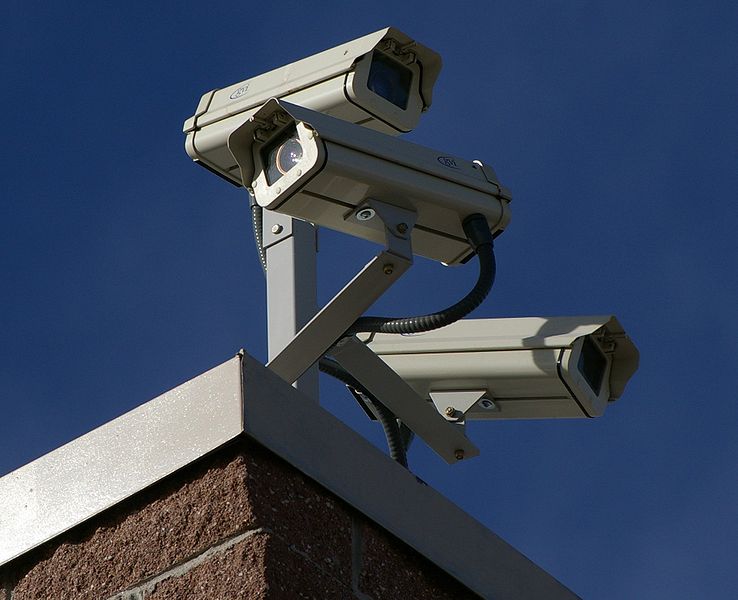
Forget cops on the beat. Crime-fighting tech now involves gunshot detectors, video surveillance, a virtual "community patrol" system that allows people to report crimes via text messages, and trainable software sensors that can recognize violent behavior.
The burg of East Orange, N.J., once a haven for crack dealers and gangs, has seen a dramatic drop in crime rates because of its focus on technology, according to an AP story.
Police chief Jose Cordero -- the New York Police Department's former anti-gang czar -- is a firm believer in technology, as the AP puts it, and he's championed East Orange's foray into 21st-century crime-fighting.
The city's efforts include trainable sensors working in concert with surveillance cameras to spot criminal behavior. The sensors can recognize "normal behavior," according to Tarik Hammadou, whose Australian firm Digisensory Technologies makes the sensors. When something abnormal happens, like an assault, programmers note the activity so the sensor will always remember the pattern, he says.
Over time, object-detection algorithms could allow cops to essentially be in multiple places at once.
For instance, video of someone raising a fist at another person is considered "abnormal behavior." When the sensor raises an alarm, a cop sitting in a command center can zoom in and see if a crime is in progress. Then a computer program can send a report to the nearest patrol car, whose location is tracked via a special grid, and an officer is dispatched to the scene.There are skeptics, of course -- a criminal justice professor notes that the sensors require plenty of training to avoid false positives, such as someone lining up behind an ATM user being misinterpreted as a hold-up. And the American Civil Liberties Union is keeping an eye on the surveillance cameras' use, AP says.
Along with the sensors, East Orange has invested in a wireless computer system for all patrol cars and a gunshot-detection system that tracks the source of shootings, the AP says. The upgrades have cost about $1.4 million, $1.1 million of which came from grants and other funds.
[AP]
138 years of Popular Science at your fingertips.
Each issue has been completely reimagined for your iPad. See our amazing new vision for magazines that goes far beyond the printed page
Stay up to date on the latest news of the future of science and technology from your iPhone or Android phone with full articles, images and offline viewing
Featuring every article from the magazine and website, plus links from around the Web. Also see our PopSci DIY feed
Science is reinventing play, from extreme sports to gamification to ridiculous roller coasters to the playgrounds of tomorrow, and this issue is chock full of fun. Also, on a less fun note: Did global warming destroy my hometown?
Just because this violation on privacy is more autonomous and "smarter" does not make It safer and less prone to corruption. 1984, here we come
"Those who are willing to sacrifice essential freedom for security deserve neither." -Ben Franklin
I'm no fan of cops, laws, or the government watching over me, but you have obviously never been to east orange.
From the sound of this article, it sounds like the cameras are only surveying public spaces, which are technically public property and NOT private property, so your right to privacy is really only limited to your personal possessions, which are not observed without due cause. I think this is a good step in a better direction.
Of course, like the article claims, it's going to be rough getting the system to understand what a crime looks like, considering many times, full on juries are unable to decide that without considerable debate.
i think this clip shows it a lot better than i can explain quickly big brother gets out of hand; http://www.youtube.com/watch?v=u-ZDgVrP55g
and what does crime "look" like?
am i reaching in my pocket for my phone or a knife... and is it to stab someone with or to cut my apple... or is that apple a brick i am about to throw at someone... to be on the "safe" side the police should be called. and it doesn't matter that i am in a business suit, because if i wasn't, it would be profiling... in any instance, i need to be watched.
am i smoking a hand rolled cigarette, or a joint... i bet the police come to find out...
my point is once the cameras go up they dont come down... just more cameras go up.
"so this is how liberty dies...with thunderous applause" -Star Wars III (have to have a little fun)
I'm just a bit skeptical. Maybe it works, but in high crime areas, the police are usually busy with the crimes that they know about.
"A car will be dispatched" -- if said car is not occupied with a crime already, with 2 more to check out after that one.
I also wonder how long the cameras will last in some of the neighborhoods.
I would just as soon be proven wrong, but I'd like to see the stats in a year or so.
ok, let me address some comments, first of all freddy..... these cameras are in east orange, not your home town, if your town was anything like east orange, you'd be asking for them
let me give an answer to your rhetorical questions, because they have answers.
yes you are reaching in your pocket for a knife and yes it is to stab someone. if it is a cell phone, it's stolen. no one throws bricks, they stab and shoot. if you're in a business suit you're going to be profiled and arrested. it happens all the time now because the cops know the only 2 people with money there are the dealers and the buyers from the suburbs but it's much easier to spot the people coming in from the suburbs. it's basically illegal to be white and driving around in the wrong part of town because they assume your only reason to be there is to buy drugs. and finally yes that is a joint you are smoking but the cops could care less, there much worse things going on there.
and to ford, the main problem is that usually the cops aren't busy, most people aren't committing crimes when the cops are around. this at least gives them a bit of a sense of direction.
regardless, i think the result of this will be that most of the crime will take place inside homes and off the streets which will be better for anyone else that's just passing through.
Ford2go: These cameras won't be going up in neighborhoods and I shouldn't have to explain why, but because they would be too much of an invasion of privacy.