A Bicycle Suspension with Sensors Built In Automatically Adapts to Changing Terrain
We may earn revenue from the products available on this page and participate in affiliate programs. Learn more › Mountain-bike...
We may earn revenue from the products available on this page and participate in affiliate programs. Learn more ›
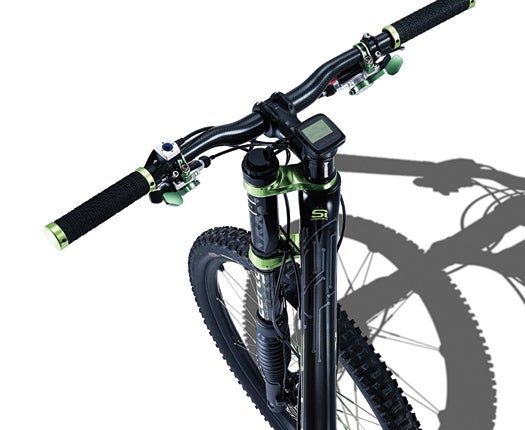
Mountain-bike suspensions are difficult, if not impossible, to adjust while riding. Cannondale’s Simon—the first completely computerized bike-suspension fork—features a hydraulic shock that can instantly change its resistance and how far it travels. Meanwhile, motion sensors and a computer calculate the best settings for the trail.
If you suddenly launch off a jump, the shock softens for a smoother landing; reach a flat area where you’re pedaling hard, and the shock firms up to boost your power.
Simon is currently a prototype, but Cannondale expects pieces of the technology to arrive on bikes within a few years.
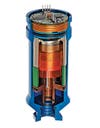
Shock Diagram
How It Works
1. A joystick lets riders select among five preset settings, such as “DH” for swallowing up big downhill impacts. You can also elect to have the suspension continually recalibrate itself.
2. A motion-sensing accelerometer in the front fork detects bumps and impacts. Meanwhile, an optical sensor inside the shock keeps track of its position, gauging how open or compressed it is.
3. Info from the sensors is sent to a computer 500 times a second. Software decides how to change the suspension based on how many bumps you’ve hit, how far the shock can still move, how fast you’re going, and more.
4. An electric motor adjusts the shock. It’s a typical hydraulic shock, in which a piston pushes oil through a valve, but the motor changes the valve’s size. Smaller means less oil flow and a firmer ride; larger means a more cushiony ride.
5. The shock readjusts with thousandth-of-a-millimeter accuracy every seven milliseconds, protecting you from bumps faster than the human brain can register them—much less react.