The best DAPs in 2024
Here are go-to digital audio players for the on-the-go audiophile.
| Best overall |
|
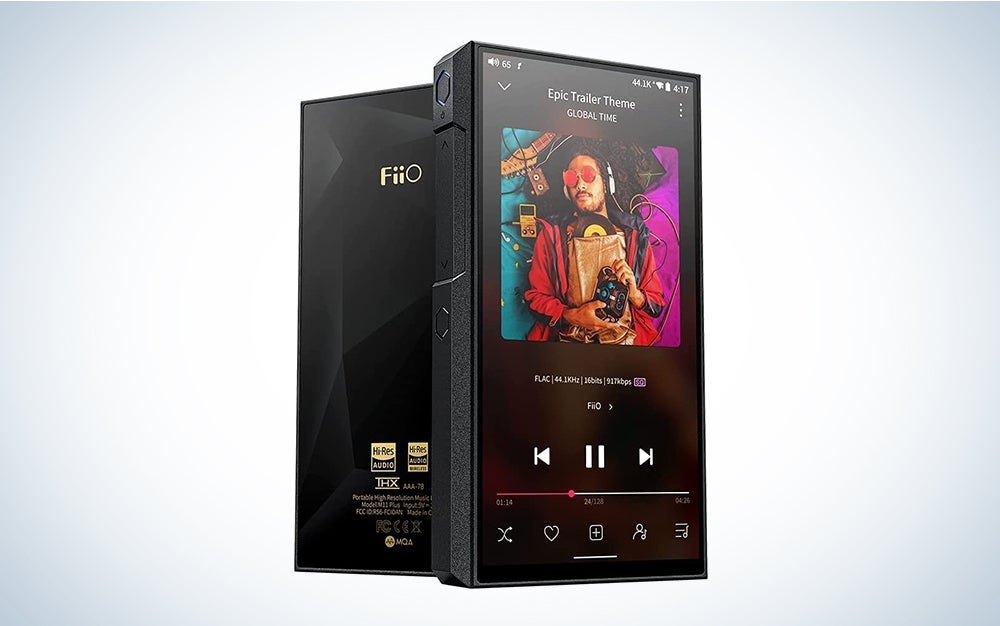
FiiO M11 Plus | SEE IT |
A responsive blend of purpose-built hardware and Android software, the M11 Plus delivers a perfect performance:price ratio. |
|
| Best high-end |
|
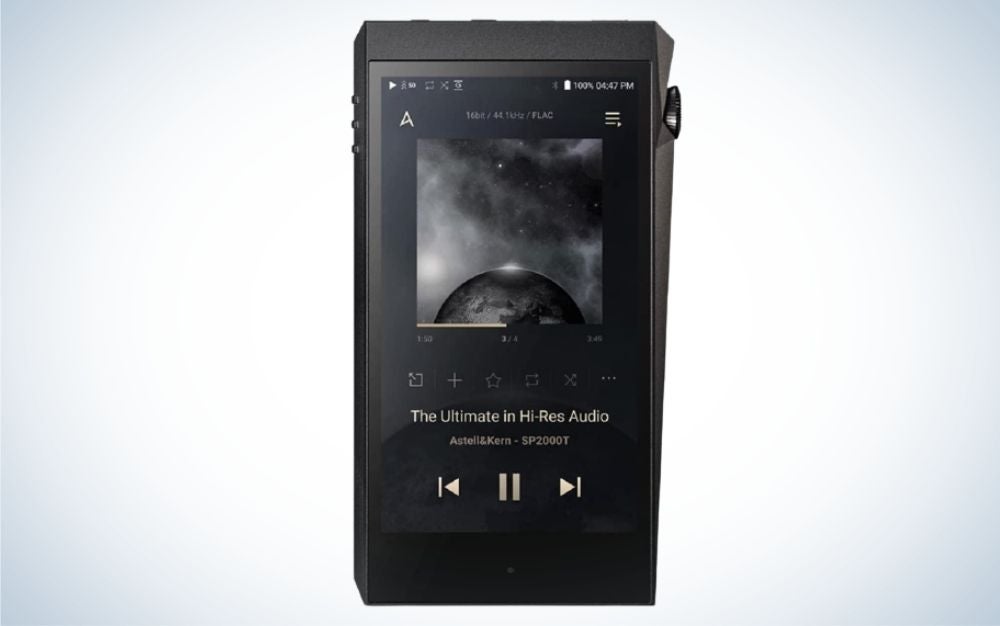
Astell&Kern A&ultima SP2000T | SEE IT |
If you’re amped to try tube tone on the go, the A&ultima SP2000T offers that unique feature alongside pretty much anything you’d want in a luxury listenable. |
|
| Best for TIDAL |
|
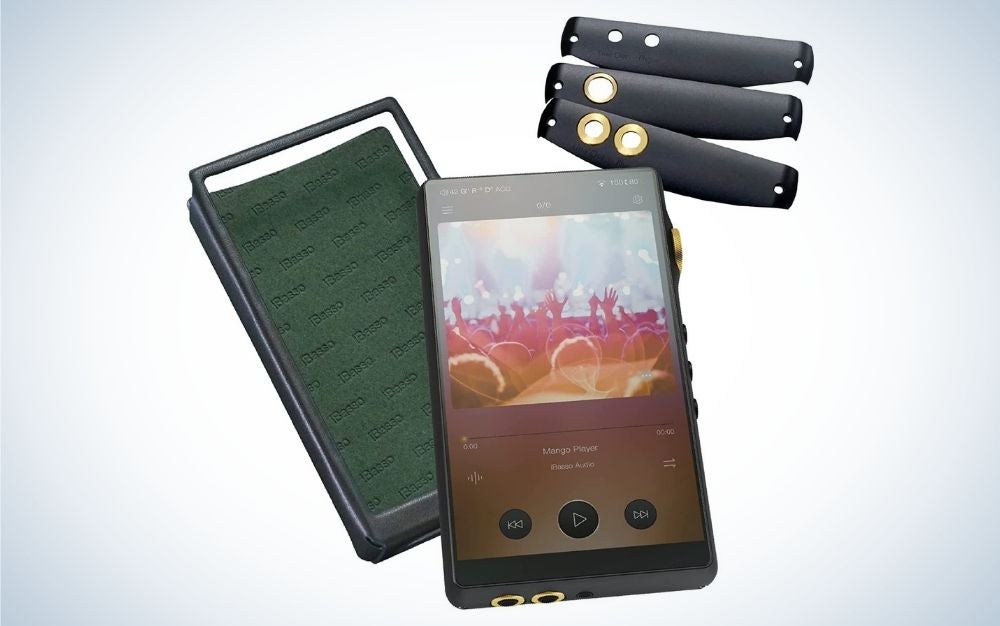
iBasso DX240 | SEE IT |
If you’re a TIDAL subscriber, you’ll want to surf the service’s selections with the iBasso DX240, which handles the top tier of TIDAL’s MQA tracks. |
We may earn revenue from the products available on this page and participate in affiliate programs. Learn more ›
Ask any audiophile, and they’ll tell you the same thing: premium sound quality still comes from wired headphones—and if you want to get the most out of your investment while out and about, you should look into DAPs, a.k.a. digital audio players. With the headphone jack’s death, getting an optimized on-the-go listening experience isn’t as easy as it used to be. It doesn’t matter if you have access to lossless audio if you’re just going to degrade it using Bluetooth. If you’re looking for that old-school iPod Touch experience given fresh life with the latest high-resolution technology, there’s only one way to go: tap the best DAPs.
These standalone devices have a sole purpose: playing music. Some portable music players do this with audio files you need to load yourself. Others come with operating systems (most often Android-based) and support streaming services like Spotify or TIDAL. They can also range widely in cost, some focusing on accessible budget pricing and others taking the form of genuine luxury items. However, they all strive to deliver the highest sound quality, exceeding what you could hope for from a smartphone and headphone adapter. If you’re on the hunt for an aural upgrade, we’re here to help. We’ve collected top-tier options, whether you’re looking for a dedicated player on a budget, a player that caters to a particular streaming service, or just want the best DAPs money can buy.
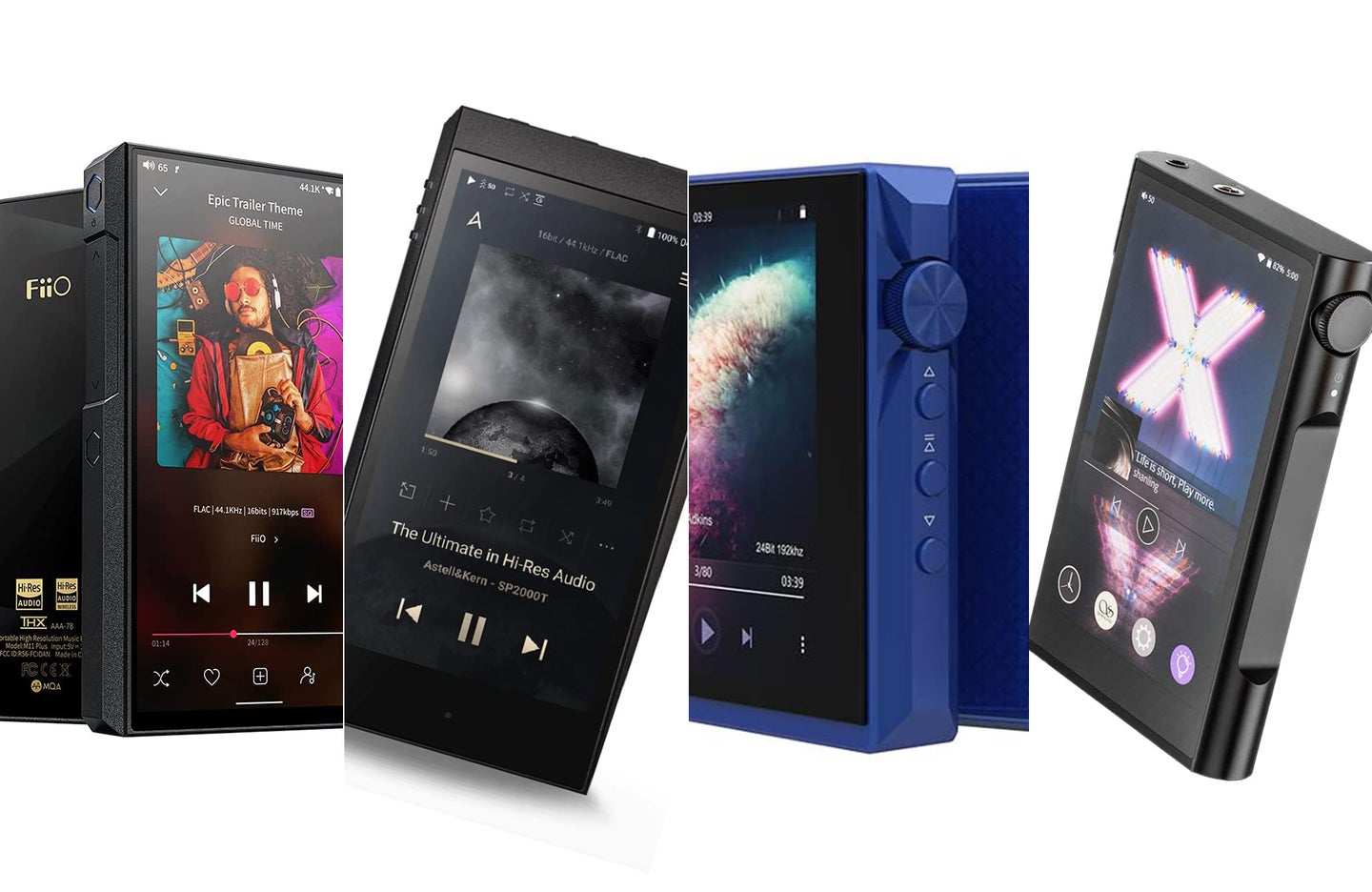
- Best overall: FiiO M11Plus
- Best high-end: Astell&Kern A&Ultima SP2000T
- Best for TIDAL: iBasso DX240
- Best under $500: Shanling M3X
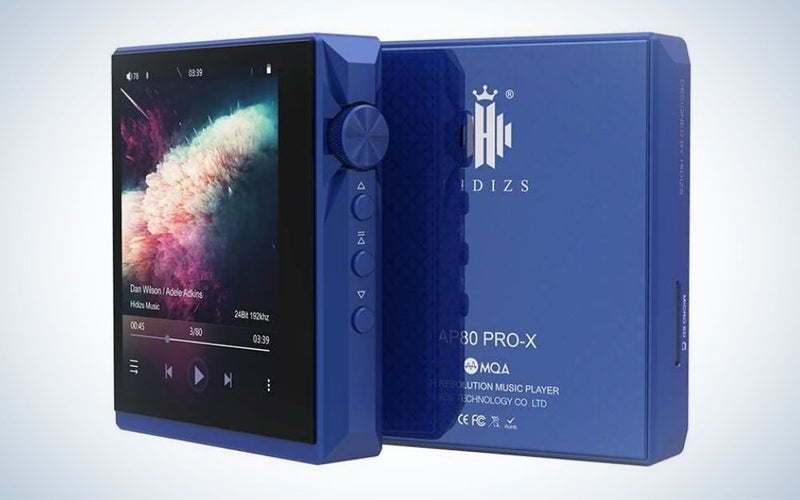
- Best budget: Hidiz AP80 Pro-X
How we chose the best DAPs
Over my years working in tech journalism, I’ve developed a passion for great sound. As an apartment dweller until 2019, I was limited to in-ear monitors and headphones, so I skipped right over loudspeakers and dove deep into personal audio equipment. I’ve been lucky enough to test dozens of different headphones, earbuds, and devices that drive them. I’ve learned and experienced far more than I ever expected to, but the depths of my audio geekery allowed me to develop a discerning eye to sort the stupendous from the snake oil.
For this article, I researched the major digital audio players released over the last several years. I began with an eye toward features and components: the on-paper specs that made certain options stand out from others. I then compared those early choices with real user impressions on audio enthusiast sites like Head-Fi and r/headphones, smaller communities like Facebook’s ChiFi Audio Reviews, and retailers like Amazon. This refined the list because what looks good on paper doesn’t necessarily translate into a great product. Finally, I relied on my own first-hand experience, as well as the pedigree of the brands producing each DAP.
The best DAPs: Reviews & Recommendations
Even with those considerations in mind, settling on the best portable player can be confusing without doing lots of research—which is exactly what we’re here for. We’ve done the digging, so you don’t have to. Here are the best digital audio players available today across half a dozen key categories:
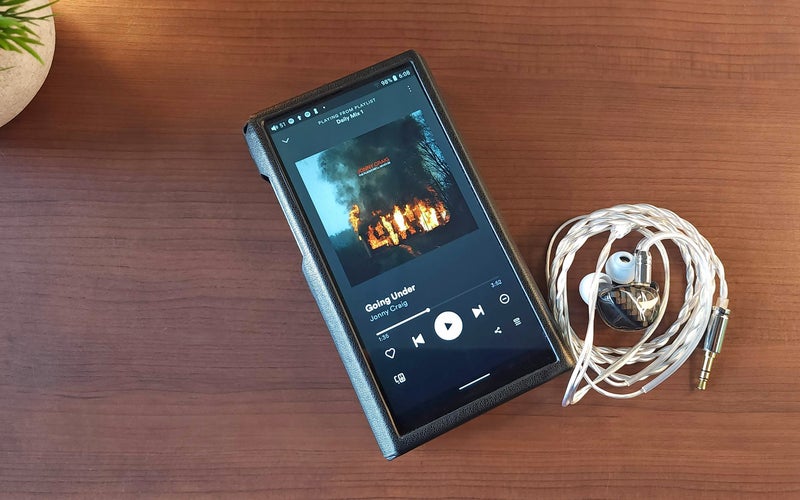
Best overall: FiiO M11 Plus
Chris Coke
Why it made the cut: The FiiO M11 Plus offers an excellent balance of price and performance, making it the go-to option under $1,000.
Specs
- Price: $699.99
- Screen size: 5.5-inch HD (1440×720) IPS panel
- Connectivity: Balanced (2.5mm/4.4mm), single-ended (3.5mm), Bluetooth 5.0 (SBC/AAC/aptX HD/LDAC)
- Music streaming: Yes
- Output power: 588mW (balanced), 206mW (single-ended)
- DAC: ESS ES9068AS x2
- Battery life: 11.5 hours
Pros
- Great balance of features and price
- Recent hardware, snappy performance
- Supports balanced and single-ended headphones
- Android 10
Cons
- Mid-tier driving power
- Battery life could be better
- Rather bulky
The FiiO M11 Plus is the best overall choice for a digital audio player under $1,000. Sure, Chinese personal audio specialist FiiO makes the budget M11S on one end of the spectrum and, on the other, packs the power of a desktop amp into transportable form with the $1,799 flagship M17. But with the approachable mid-priced $699 M11 Plus, the company has done something equally impressive: delivered a DAP that over-performs for its price and presents an outstanding balance of features, sound quality, and a premium look and feel. While it’s not the best in any one area, it culminates in the best value in its class.
The M11 Plus offers a smooth and natural sound that doesn’t color the headphones you’re listening to. The power from its THX AAA-78 amp module comes in the middle of the pack at only 588mW over its balanced port and 206mW over single-ended. However, it delivers enough drive for most full-size headphones to reasonable volume levels and virtually any in-ear monitor (IEM) you’d care to try. What matters most is that the pure power you do get, with three gain modes, is low distortion while also lively.
One of the best parts of the FiiO M11 Plus is its user experience. It features a big, 5.5-inch HD display that’s crisp and responsive. Under the hood, it uses a Snapdragon 660 chipset to power its Android 10 operating system. Neither of these is cutting edge, but both are newer than what you’ll find on most other DAPs at this price and allow this Android DAP to be snappy and responsive as you navigate files (up to ultra-resolution DSD512/768kHz PCM) and/or streaming including TIDAL (supporting up to 8x MQA unfolding). That big screen and fast tech do make an impact on battery life, however, with only 11.5 hours rated by the company when listening over balanced (14 hours over 3.5mm). However, Quick Charge 4.0 support allows the M11 Plus to recharge completely within four hours.
Adding to its list of high points are dedicated buttons for track controls and volume (including a capacitive touch slider), a glass front and back, a leather case, and a pre-installed screen protector for added protection. You have a DAP that looks, feels, and performs better than just about anything else in its price bracket. While FiiO makes that fancier flagship worth exploring if you only own hard-to-drive summit-fi headphones, the M11 Plus lives in the sweet spot of the performance-to-price ratio.
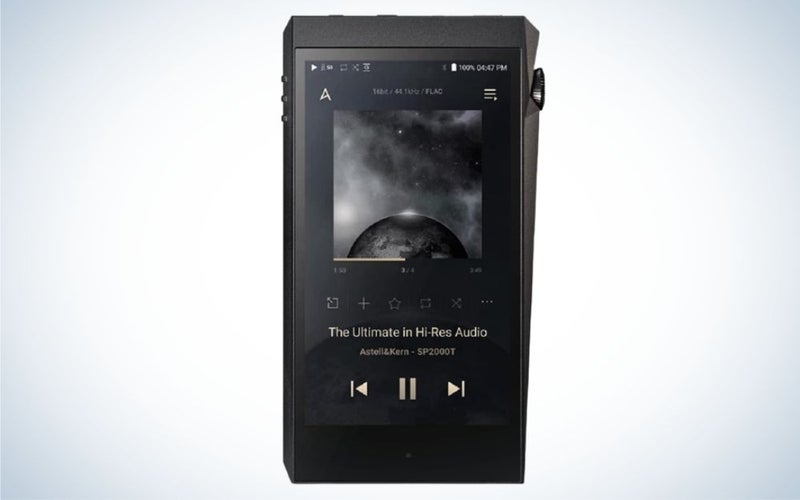
Best high-end: Astell&Kern A&ultima SP2000T
Astell&Kern
Why it made the cut: The A&ultima SP2000T sits in the lap of luxury, or at least the pants pocket of luxury, featuring a refined design and top-of-the-line features befitting its ultra-high-end price tag.
Specs
- Price: $2,499.99
- Screen size: 5-inch Full HD (1920×1080) panel
- Connectivity: Balanced (2.5/4.4mm), single-ended (3.5mm), Bluetooth 5.0 (including LDAC)
- Music streaming: Yes
- Output power: 6 Vrms (balanced), 3 Vrms (single-ended)
- DAC: ESS ES9068AS x4
- Battery life: 9 hours
Pros
- Gorgeous design
- Outstanding power output
- Excellent format support to listen to just about anything
- Tube or solid-state amplification
Cons
- Incredibly expensive
- Middling battery life
- Sluggish performance
The Astell&Kern SP2000T is a tremendous digital audio player with an equally tremendous price tag. At $2,499, it’s fair to have high expectations, and the SP2000T delivers—mostly. The design philosophy seems to be “everything and the kitchen sink,” so if you’re the kind of listener who must have it all and doesn’t mind paying for it, this can be a great choice.
Astell&Kern makes all manner of enviable audio accessories, each with a precisely engineered purpose. For instance, the $1,299 KANN Max sacrifices some versatility to concentrate on 15V of ultra-high power. The SP2000T only hits half that output, so why are you paying so much more for it? The answer lies at the heart of the amp and DAC arrangement in its distinctively angular, sleekly aluminum chassis. It features a quad-DAC system with separate channels for balanced and single-ended channels, allowing it to offer plenty of ultra-clean headroom. At the same time, it integrates both Korg Nutube 6P1 tube and solid-state amp options that can be run independently to customize the sound (clean and crisp for solid-state or warm and musical for the tube amp) or simultaneously to have the best of both worlds in a hybrid mode.
It also offers three different connection options for balanced and single-ended headphones (2.5mm, 3.5mm, and 4.4mm) and supports Bluetooth audio, including Sony’s hi-res LDAC codec. If you prefer to listen locally, it features 256GB of internal storage for files (up to DSD512/32-bit 384kHz PCM) with up to another 1TB available with a MicroSD card. Simply put, portable DAPs don’t come much better than this.
The SP2000T is a smart device with dual-band Wi-Fi, which means you’ll have access to all of your favorite streaming services and use the device as an endpoint to access a Roon music server. Hence, you can access a consolidated library of advanced-resolution audio when on your local network. It also natively supports full MQA decoding and wide format support for standalone music files, so you’ll never need to compromise on audio quality. Unfortunately, A&K compromised for you, as the hardware powering the software can be sluggish. This can make sorting through albums and artists on streaming services a drag, which may be especially frustrating if that’s how you like to enjoy your music.
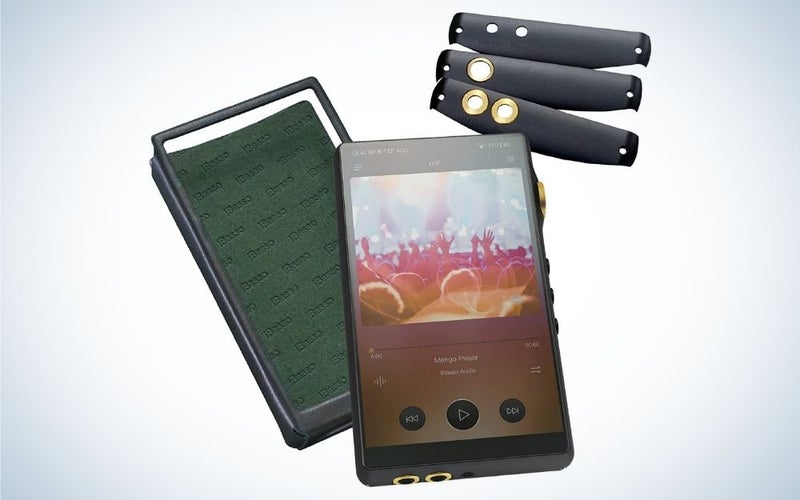
Best for TIDAL: iBasso DX240
iBasso
Why it made the cut: iBasso calls this its “pocket MQA player,” and for a good reason: This player supports full 16x MQA decoding to achieve peak sonic performance.
Specs
- Price: $949.99
- Screen size: 5-inch HD (1080p) panel
- Connectivity: Balanced (2.5mm), single-ended (3.5mm), Bluetooth 5.0 (including aptX HD/LDAC)
- Music streaming: Yes
- Output power: 878mW (balanced), 281mW (single-ended)
- Battery life: 11 hours
Pros
- Full 16x MQA decoding
- Big and beautiful HD screen
- Lots of power
- Swappable op-amps
- Fast performance
Cons
- Extra thickness means more bulk
- Quite expensive
- No native 4.4mm audio jack (but the optional, interchangeable AMP8MK2 offers 4.4 TRRRS & 3.5 TRS ports and discrete high-voltage, high-current output for demanding headphones and multidriver in-ear monitors)
- No Google Play Store
The iBasso DX240 is an incredibly well-rounded DAP. At $949, it doesn’t come cheap, but it’s hard to argue that this player doesn’t offer a lot, particularly if you’re a regular listener of TIDAL. Unlike many competing players, the DX240 offers full 16x MQA decoding. That means Master Quality Authenticated tracks streamed over dual-band Wi-Fi will play at their full resolution with zero sacrifices: exactly what the most discerning TIDAL fans demand (after all, the HiFi Plus tier costs $19.99 a month, so why waste bits or bucks).
Like the FiiO M11 Plus, it features a fast Snapdragon 660 processor and 4GB of RAM to ensure Android 9.0 runs smoothly, even while swiping through playlists. There’s also 64GB of built-in storage and the option to add a MicroSD card for even more. If you’re listening to your local library (32-bit/768kHz PCM and native DSD512 decoding supported), you can swap over to iBasso’s MangoOS for even better performance (yes, this is a dual-OS DAP).
Even more interestingly, audio-centric tinkerers can physically swap out the amp module to tailor sound (just like in the company’s flagship $1,599 DX320, where the AMP13 adds a tube element somewhat like the Astell&Kern SP2000T above, though more involved to implement). The company sells a selection of different plug-and-play cards that go into the bottom of the DX240, introducing discrete amplifiers that alter the sonic signature and performance, as well as output power and plugs (including the AMP8MK2 to add a balanced 4.4mm option). If you’d rather not change out actual circuitry, the operating system supports your choice of graphic or parametric EQ.
Despite being an impressive package, there are a few caveats to remember. At 19mm thick, it’s a bit bulkier than many other DAPs, so sliding it into a pocket with a phone might be problematic. Despite running Android, this DAP also doesn’t support the Google Play Store. Instead, it comes pre-loaded with APKPure, a well-known alternative, but it’s still disappointing on a music player that costs almost a thousand dollars.
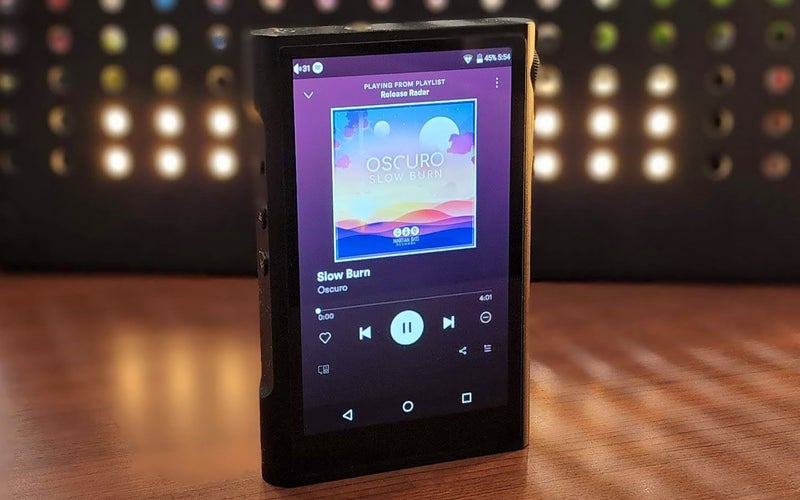
Best under $500: Shanling M3X
Chris Coke
Why it made the cut: The Shanling M3X delivers a lot for less and, while released in 2021, remains the best choice under $500 since then.
Specs
- Price: $369
- Screen size: 4.2-inch (1280 x 768) panel
- Connectivity: Balanced (4.4mm), single-ended (3.5mm), Bluetooth 4.2 (including LDAC, LHDC, aptX HD, aptX, SBC)
- Music streaming: Yes
- Output power: 240mW (balanced), 101mW (single-ended)
- Battery life: 23 hours
Pros
- Affordably priced for its feature set
- Good power output
- Ergonomic and easy to use
- Great battery life
- Full x16 MQA decoding
Cons
- App performance can be sluggish
- System-wide EQ is poor
Shanling has long produced great entry-level ultra-compact DAPs (the $129 M0 Pro, for example). For those delving beyond dabbling with a portable player, the M3X has been a fan favorite since 2021, and that doesn’t seem poised to change anytime soon. Its small 4×3-inch frame slips easily into the pocket, and its well-placed controls are easily manipulated without looking. It supports standard 3.5mm headphones and those that use balanced 4.4mm cables (which has largely become the standard connection for balanced IEMs). The build quality is also excellent, with a glass front and back (screen protectors pre-installed) and extruded aluminum sides.
Like our pick for the best overall DAP, the Shanling M3X is really about the sum of its parts. Under $500, it’s just hard to find such a good combination of features. Its offers great power output for the price, excellent build quality, and even supports the Google Play Store by default. That means you can browse Facebook or check your email while enjoying your favorite songs. And download any music streaming service, of course.
Where the M3X shows its more affordable price is its chipset. Unlike the pricier DAPs on this list, it only features a Snapdragon 430 chipset and 2GB of RAM, so actually browsing the web is functional but will pale in comparison to a smartphone that’s several years old. The system-wide EQ is also bog-standard Android fare, which means a noticeable volume drop and a poor degree of control.
Still, these shortcomings don’t hold the M3X back very much. This player pulls features from DAPs double and triple the price. Case in point, the M3X supports full 16x MQA decoding, just like the nearly $1,000 iBasso DX240. While, because of supply chain issues, it may go in and out of stock, the M3X is worth keeping an eye on if you’re looking for the best affordable DAP.
Best budget: Hidiz AP80 Pro-X
Linsoul
Why it made the cut: The Hidiz AP80 Pro-X can’t stream music, but it offers a highly customizable sound with lots of versatility.
Specs
- Price: $189.99
- Screen size: 2.5-inch
- Connectivity: Balanced (2.5mm), single-ended (3.5mm), Bluetooth 4.1 (including AAC, aptX, LDAC, UAT codecs)
- Music streaming: No
- Output power: 190mW (balanced), 70mW (single-ended)
- Battery life: 9 hours (balanced), 13 hours (single-ended)
Pros
- Supremely pocketable
- Good output power at this price
- Very user-friendly EQ
- 8x MQA decoding
Cons
- Plays local files only in normal mode
- Comparatively low battery life
- No onboard storage
The Hidiz AP80 Pro-X is unlike any other DAP on this list and is excellent value for its budget price. Coming in at $189, it is the only digital player unable to connect to major music streaming services. But don’t let that fool you, as the AP80 Pro-X has a lot going for it that makes it well worth considering for music lovers on a budget.
Much of the magic of the AP80 Pro-X comes from its simplicity. It runs the HiBy OS, which does not have access to the Google Play Store but is fast and responsive, avoiding the pitfall of sluggishness plaguing so many digital audio players. It can accept MicroSD cards up to 512GB, holding up to a couple of thousand albums (including files up to 32-bit/384kHz PCM and DSD256). And it delivers those files with plenty of power across its 3.5mm single-ended (70mW) and 2.5mm balanced (190mW) connections.
If you want to listen to streaming services, you’ll need a smartphone or computer. When connected to an internet-enabled source, the AP80 Pro-X can act as a DAC, receiving that audio and sending it through (complete with 8x MQA decoding) to your headphones. It functions similarly to a dongle DAC or a wireless Bluetooth receiver (supporting AAC, aptX, LDAC, UAT codecs) but with all the features and enhanced sound quality of this much more sophisticated player. It also offers expansive sound customization with sliders dedicated to specific descriptors, like “bass extension” and “note thickness.” It’s a unique, user-friendly touch other DAP manufacturers could learn from.
At $189, the AP80 Pro-X offers quite a lot, but it’s not without its sacrifices. It doesn’t come with onboard storage to begin uploading your files immediately. The battery life is also only so-so. But with a one-hour complete recharge time, downtime shouldn’t be much of an issue.
Things to consider before buying one of the best DAPs
Like most things within the audio hobby, choosing the right DAP isn’t as simple as finding what’s popular and assuming it will work for you. Prices scale into thousands of dollars; unsurprisingly, those expensive products tend to get rave recommendations. Based on positive feedback alone, you might assume you must spend $1,000 for a great experience. Instead, the much wiser choice is to work backward from the features you need and find the best digital audio player that fits your budget. Here’s what to look for before committing to a purchase:
Connectivity
The first thing to consider with any DAP is its connectivity options. Some DAPs are limited solely to single-ended (standard 3.5mm) connections. Others offer 4.4mm or 2.5mm balanced connections—ports that split the signal into left and right channels for reduced distortion, improved clarity, and increased power delivery. Even if your current headphones use a standard 3.5mm jack, it’s worth considering whether a balanced earphone may be in your future. Since balanced outputs tend to offer more power, it is a useful option if you’re listening to harder-to-drive headphones.
One important thing to remember is that, due to their size, the best hi-res players typically lack support for the large 6.35mm jacks common to over-hear headphones. Using a DAP with cans like these is still possible, but you’ll need an adapter to make the connection. This flexible option from Sennheiser is an excellent choice and comes in at just under $20.
Connectivity doesn’t stop at the wire, however. Some DAPs also support Bluetooth to send and/or receive audio, as well as Wi-Fi for higher-resolution/bandwidth audio. If you want your device also to drive true wireless earbuds or the best portable speakers, you’ll need to be sure it supports Bluetooth as a feature. It’s important to acknowledge that, while convenient, Bluetooth isn’t the highest-fidelity option. However, pairing earbuds and a DAP that support the LDAC codec is a solid listening experience, and aptX Lossless, while on very few components currently, has potential.
Output power
Right up there with connectivity options is how much power the portable DAP can produce. This isn’t usually an issue for small, easy-to-drive in-ear monitors, but it is a major consideration if you’re considering over-ear headphones. Audiophile-grade cans often require the extra power of a dedicated headphone amplifier to sound their best, and a DAP that doesn’t produce enough power to drive them is bound to disappoint.
This information is usually found on the specification list for most players and is rated in milliwatts (mW) or volts RMS (VRMS). It is typically rated against a certain resistance measured in ohms: 70mw@32Ω, for example. The amount of output power can also vary between the balanced and single-ended (3.5mm) outputs. So, it’s important to consider which port you’ll be using and not just assume the highest possible output power is what you’ll be getting.
Since headphones have an incredibly wide range of power demands, offering specific advice without knowing which will be used is impossible. Generally, 50mW of output power is sufficient for most earphones. Headphones can be more demanding. To be safe, run your headphones through a headphone power calculator to find out exactly how much power output you should be targeting.
If you plan to listen to a mix of in-ear and over-ear headphones, consider looking for a DAP with high- and low-gain modes for less hiss and more fine-tuned volume adjustment. A very high-output player may work great for a demanding pair of audiophile headphones but could make listening to sensitive multidriver earbuds difficult with very touchy volume controls. Being able to swap between low- and high-gain modes can be game-changing to the versatility of a DAP.
Support for streaming services and file types
Digital audio players come in two varieties: simple music-file players and smart devices supporting online streaming. If you’re a die-hard fan of lossless audio with a deep catalog of hi-res audio files, you’ll probably be happy with a standard “dumb” DAP that has the sole job of making your music sound great.
If you’re a fan of TIDAL or Spotify, you’ll need a DAP that can connect to the internet and has a display capable of navigating these apps. That means running some version of Android and, usually, a more complicated and expensive device.
Smart audio players often feel like smartphones designed around playing music, which can be both good and bad (if you’re looking for that kind of convergence device, check out something with an upgraded integrated DAC/amp, like the ASUS ROG Phone 6). On the plus side, DAPs that support streaming services give you access to huge music libraries and the ability to pick up where you left off across different devices. The downside is that, since the focus is on audio quality, the actual computer side of the device is often several generations old, including the operating system. Many smart DAPs feel sluggish compared to similarly priced smartphones.
The other thing to consider is what file formats the device can play back. To stream the highest quality tracks from TIDAL, your DAP must support decoding those files. TIDAL’s top streaming tier features MQA, or Master Quality Authenticated, tracks that use a proprietary compression algorithm that only some players can fully decode, usually at an additional cost. Likewise, if you’re playing local files, you’ll want to be sure the device supports the format of your library (FLAC, ALAC, DSD, WAV, etc.).
Battery life
Finally, the last thing to consider when purchasing a DAP is how long you can expect it to play between recharges. Somewhat counterintuitively, the fancier DACs often offer worse battery life due to their large screens, Android operating systems, and more powerful digital signal processing options/amplifier output. Any DAP worth investing in will last at least through a workday of listening. If you don’t mind plugging in overnight, this will likely be sufficient.
Along with this, look closely at how long the player takes to recharge. The Hidiz AP80 Pro-X comes in on the low end for battery life but takes only an hour to fully recharge, which means a quick plug-in throughout the day will likely close the gap in usability for extended listening sessions. If you anticipate having to plug in, also check if the device can still be used while charging.
FAQs
Q: What is a DAP?
The acronym “DAP” stands for Digital Audio Player. These standalone devices aim to play your music back at the highest quality. While many audiophile products pair with a smartphone via USB, DAPs remove your phone from the equation entirely. Instead, they’re entirely built around sound quality, including components and designs engineered to maximize the listening experience.
The best-known DAP is probably the original Apple iPod. Since those small MP3 players, many listeners have become content with the ease of listening wirelessly through their smartphones. This isn’t a great solution for audio enthusiasts and music fans with favorite wired headphones. A DAP can be the perfect answer for them, creating a portable hi-fi system that allows them to carry a top-tier listening experience everywhere they go.
Q: Are DAPs worth it?
If you love music, it makes sense to have a device dedicated to it. While it’s certainly possible to listen through your smartphone, it’s an incredibly complex device trying to do multiple things simultaneously. Audio performance is important to smartphone engineers, but it’s hardly the top concern when compared to everything else a modern smartphone is responsible for: operating system performance, multiple radios, adaptive refresh rates, complex camera systems, running apps at once, notifications, and, of course, call quality. This is also reflected in the components and, well, the lack of a headphone jack.
A DAP, on the other hand, is designed entirely around sound quality. They often feature high-quality DACs (digital-to-analog converters) and higher output power. These improved components make an audible difference in sound quality, improving clarity and dynamic range and allowing it to drive a wide range of headphones. Like a desktop computer, removing the audio processing from the electrically noisy circuit board of a smart device can also remove a potential source of interference.
Ultimately, one of the key reasons many buy a DAP is to invest in a portable “foundation” for their listening experience. Investing in a dedicated portable audio player is rarely “necessary” in this day and age, the same way it’s not necessary to buy the $899 Bluesound SOUNDBAR+ when you can buy one of the best soundbars under $500 and get many of the same features—unless you’re specifically slowly working up to a full music-centric wireless surround sound system. Rather than purchase a tethered DAC that will let your phone do the heavy lifting, a DAP becomes a touchstone to the audio hobby that’s personal to each listener.
Q: How much do DAPs cost?
Digital audio players span the gamut in price. Basic DAPs can be found on Amazon for less than $50. Others, like the Astell&Kern SP3000, can cost several thousand dollars. It’s not usually necessary to spend an exorbitant amount of money on a digital audio player. Still, they can become quite expensive, easily reaching $3,000-$5,000 with more advanced features and luxuries like copper enclosures.
As a rule, DAPs that support Android will be more expensive than those that do not. Likewise, DAPs that support more connectivity options, like balanced versus just single-ended headphones, will also be more expensive. Within this framework, there can be a wide range of prices, so it’s important to look at what features you need and desire most and choose the option that works for you.
It’s important to remember that hi-fi can be an expensive hobby. The cost ceiling stretches far higher than most listeners would ever consider spending. Just because a DAP is twice as expensive does not mean it’s twice as good.
Final thoughts on the best DAPs
- Best overall: FiiO M11Plus
- Best high-end: Astell&Kern A&Ultima SP2000T
- Best for TIDAL: iBasso DX240
- Best under $500: Shanling M3X
- Best budget: Hidiz AP80 Pro-X
Deciding on a DAP can be intimidating. With prices extending into hundreds of dollars and beyond, the pressure to make the right decision is high. But, with a focus on features, it’s possible to find the right fit that will let you enjoy your music to the fullest on the go. The best DAPs provide room to grow and explore the hobby even further. With care, they even tend to retain resale value, giving you a one-up on that next inevitable upgrade.
Why trust us
Popular Science started writing about technology more than 150 years ago. There was no such thing as “gadget writing” when we published our first issue in 1872, but if there was, our mission to demystify the world of innovation for everyday readers means we would have been all over it. Here in the present, PopSci is fully committed to helping readers navigate the increasingly intimidating array of devices on the market right now.
Our writers and editors have combined decades of experience covering and reviewing consumer electronics. We each have our own obsessive specialties—from high-end audio to video games to cameras and beyond—but when we’re reviewing devices outside of our immediate wheelhouses, we do our best to seek out trustworthy voices and opinions to help guide people to the very best recommendations. We know we don’t know everything, but we’re excited to live through the analysis paralysis that internet shopping can spur so readers don’t have to.
