Several Florida residents have reported seeing the Leptotyphlops microsnake long before it was announced as a new species, which herpetologist Blair Hedges named for his wife.
Readers want to know: how can you tell if the new animal or plant you've stumbled across is a unique, as of yet unnamed species?
Do you know the answer?
Submit your science and technology questions to fyi@popsci.com.
Five amazing, clean technologies that will set us free, in this month's energy-focused issue. Also: how to build a better bomb detector, the robotic toys that are raising your children, a human catapult, the world's smallest arcade, and much more.


Online Content Director: Suzanne LaBarre | Email
Senior Editor: Paul Adams | Email
Associate Editor: Dan Nosowitz | Email
Assistant Editor: Colin Lecher | Email
Assistant Editor: Rose Pastore | Email
Contributing Writers:
Kelsey D. Atherton | Email
Francie Diep | Email
Shaunacy Ferro | Email
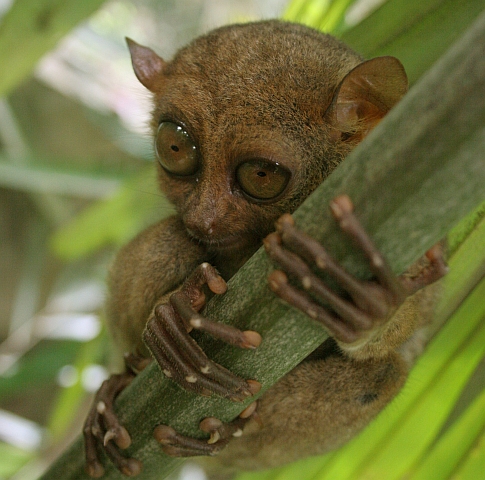
Looks like some kind of Lemur maybe a mouse Lemur.
Well, you have a picture of a Tarsier and the article is about
thread snakes and the recent "re-discovery" of a "new" species. No Florida residents in Barbados. The links are fine, however.
Photographing your find is most important. With so many similar creatures in the world, a verbal description is as useless as nipples on a boar hog. Figure out as best you can roughly what kind of animal you have found i.e. reptile, invertebrate, mammal etc. and what known animal (or plant) it is most similar to. Then search the web for articles or information relating to your find. You will find that these articles are written by experts in their field whom, with a little digging, you should be able to contact. Most biologists are happy to identify photos if you have made a reasonable effort to find out on your own and would jump at the chance to investigate a potentially new species.
What an adorable Bushbaby !
-----------------------
The Barbados Threadsnake only occurs on Barbados. What people in Florida and other places (Hawaii, other islands in the Pacific, California, Texas, South
America, Africa, etc.) are seeing is a common introduced species, the
FlowerPot Blindsnake, Ramphotyphlops braminus, that belongs to a different
family (there are other species as well, but this one is common around
houses). It was introduced probably from Indonesia. It is BLACK and very
thin. The hatchlings and young can fit on a coin, but the adults are larger
than the adults of the Barbados Threadsnake (the Flowerpot Blindsnake also
occurs on Barbados). The two are not the same species for the same reason
that not all small birds or small mammals are the same species (There are
3,100 species of snakes). Different species often have characters that must
be seen under a microscope. Often, their sex and adult status can only be
determined by an expert. Use internet searches to determine what you have,
and to learn more about the species that occur in your area.
just google it