Vanishing? Migrating? Enough with the sad pictures. Today's infographic breaks down where the polar bears are now, and how they're doing.
Polar Politics mag3737 via flickr

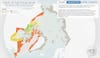
We like polar bears, but we don't like how they've been bandied about by advocates on both sides of the political debate over climate change. That's why we think today's interactive infographic is great--it's a clear snapshot of where polar bears are today and how each population group is faring. No tearjerking pictures, no drama. Just the facts.

The image below is just a snapshot. You can check out the whole thing here.
State of the Polar Bears
State of the Polar Bears: Go here for a fully interactive version.  IUCN/SSC

Want to learn more about the environment, solar energy, sustainability, and more? Subscribe to Popular Science today, for less than $1 per issue!

2 Comments

Uhm, not quite. The map/infographic does not show polar bear populations at all. Instead, it shows an estimate of the change in those populations. The actual populations counts are rare and often have a massive error range.

You can find the actual population numbers in the Subpopulations section. Select a sub-population, and at the top in the middle is a "Historic Pop." button. This will show actual population counts, instead of estimates.

The main take away from this should clearly be that we do not have enough data on any of the populations. The best one I could find was Western Hudson Bay, which saw a decline up to 2004...when the excellent data stopped.

Looking at data after 2006, which is only a very small amount, showed considerable population increases. In 2006 however, there was 1 that showed a very substantial decline.

I find it particularly interesting how much more data there is for the 90s up until 2006, versus current data. There have been numerous studies since then, but they have just used old data. It would seem we know very little of current populations. At least according to this infographic anyways.

Zechio, good assessment of the facts laid out. However, I'd like to think that the Inuit tribes issuing more and more polar bear hunting tags on the grounds of their increasing counts of population are a better source for reliable polar bear numbers than most others. After all, their income relies on the health of such populations of polar bears and they have a financial interest in keeping them around.

Also, does it bother anyone else that polar bears are not a separate species from brown bears like we were all told in school? They can and do in the wild, mate with brown bears to birth viable offspring that reproduce. This means that they are neither isolated from or so genetically different from brown bears to be a separate species.


July 2013: The Future Of Flight

The incredible innovations, like drone swarms and perpetual flight, bringing aviation into the world of tomorrow. Plus: today's greatest sci-fi writers predict the future, the science behind the summer's biggest blockbusters, a Doctor Who-themed DIY 'bot, the organs you can do without, and much more.


Online Content Director: Suzanne LaBarre | Email
Senior Editor: Paul Adams | Email
Associate Editor: Dan Nosowitz | Email
Assistant Editor: Colin Lecher | Email
Assistant Editor: Rose Pastore | Email

Contributing Writers:

Kelsey D. Atherton | Email
Francie Diep | Email
Shaunacy Ferro | Email

circ-top-header.gif
circ-cover.gif
bmxmag-ps