Life On the Edge: Four Visions For Inhabiting a World Transformed By Climate Change
Conceptual shelters that will protect us all from the perils of our rapidly changing environment: rising waters, extreme heat, rampant pollution and overpopulation
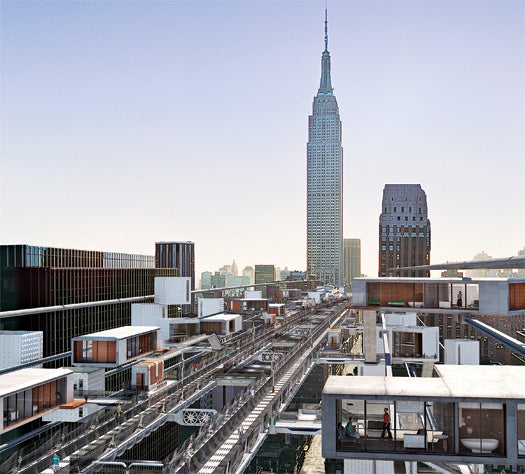
Environmental disruptions and technological advances have always influenced where and how people live. Early humans may have left Africa after rapid fluctuations in rainfall destroyed their food supply, and the opening up of the American Southwest occurred roughly in parallel with improvements in air-conditioning technology. In the decades ahead, a warming planet and a booming population will again alter where we live and how we construct our homes.
PROBLEM: RISING SEAS / SOLUTION: CITY(E)SCAPE
DESIGNERS: MUSTAFA BULGUR AND SINAN GUNAY
The most immediately disruptive force could be a rapid rise in sea levels. A coalition of scientists from Denmark, England and Finland predicted last year that by the end of this century, melting ice and thermal expansion will drive up the world’s sea levels by more than three feet. It’s unclear how many people that would displace, but the damage could be vast—approximately 10 percent of the world’s population lives in coastal areas lower than 30 feet above sea level. Land that remains above water will face increasingly frequent storm surges and flooding. The residents of coastal cities could head for higher land, or they could do something distinctly more drastic: They could add a second city above the water.
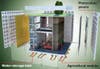
Agriculture Model
New York City, for instance, is an archipelago that could lose as much as a fifth of its landmass by 2080. But Mustafa Bulgur and Sinan Gunay, recent graduates of Istanbul Technical University’s architecture school, suggest that New Yorkers could make up the lost housing by stringing cables between existing skyscrapers and suspending some 600,000 prefabricated homes among them. By tethering a cable over the flooded streets and avenues—and even extending those cables out to structural towers in New York Harbor—it would be possible, they say, to safely house up to 2.5 million people.
The homes themselves, most of them no larger than 800 square feet, would be made from lightweight titanium plates and held together by even lighter-weight carbon nanotubes. Each would be secured to its support cables by powerful electromagnets. It will be hotter in 2080, too, so the northern and southern facades would be covered in photochromic Plexiglas, which adjusts its translucency according to the strength of the sun. The remaining surfaces would be covered with spiky eight-inch-thick photovoltaic panels. (The spikes, Bulgur says, generate more energy than standard flat panels, because they increase the surface area of the solar collector.) Each unit would contain its own “agricultural module”—a tall column of soil, held together by a silicone net, that would provide fresh fruit and vegetables and also help insulate the house. A tank would store more than 5,000 gallons of freshwater from the citywide supply, which itself would use highly efficient desalination processes to transform the source of the city’s trouble into its nourishment.
Other architects have proposed a different approach: homes that require no land at all. Zigloo, a firm in Canada, envisions a narrow underwater skyscraper, deeper than the Empire State Building is tall, that by collecting rain for freshwater and using sun and wind for power would provide a self-sufficient home for 2,000 people (zigloo.ca). Gro Architects in New York proposes harvesting tidal motion to power a network of floating single-family homes (groarc.com). And with the Sub Biosphere 2, architect Phil Pauley imagines a completely submergible habitat for as many as 200 daring aquanauts (philpauley.com).
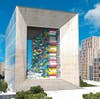
Monument Squatting
PROBLEM: POPULATION / SOLUTION: AUTO-DEFENSE
DESIGNER: STÉPHANE MALKA
In 2008, for the first time, more than 50 percent of the people on Earth lived in cities. This was good news for the environment; New Yorkers, for example, have a carbon footprint that is a third of that of their suburban and country-dwelling counterparts. But that population shift will also present major challenges. By 2030, some five billion people are expected to live in cities, up from more than 3.3 billion this year—and those cities are expected to be packed. In the 2000 national census, for instance, New York City had a density of 26,400 people per square mile. In 2030 that number is expected to be about 30,000.
New construction will help to alleviate some of the crowding, but Stéphane Malka has another idea: to make better use of the buildings that are already there. Malka, a 35-year-old French architect, proposes taking over La Grande Arche de la Défense, a 361-foot-tall office building and monument to national brotherhood in Paris. It’s the perfect building to showcase a system of infill design. In Malka’s vision, the arch’s hollow belly transforms into a colony of 450 388-square-foot prefab apartments.

Prefab Topview
Auto-Défense, as he calls the project, relies on basic modular assembly. Housing units would be prefabricated from steel, glass and wood facades stripped from other buildings, then flat-packed and delivered to the arch by truck. On arrival, they would be maneuvered into a structural scaffolding, which itself would already have been anchored to the interior facade of the arch, and locked into place by means of simple mortise-and-tenon joints. In La Défense, the units could be stacked as many as 25 high, but Malka’s design could be applied to the side of any building.

Prefab Frontview
To get in and out of their homes, residents could catch elevators among the offices on either side of the arch—the two sides of the arch would be connected by elevated catwalks supported by suspension cables—and move from house to house by way of more catwalks, attached to the scaffold itself.
Malka’s vision of close-packed homes has precedent, particularly in Japan, where small-space living has been common for decades. In 1952 the architect Makoto Masuzawa built the 538-square-foot Minimum House. Architect Makoto Koizumi revived the design, which can house a family of five, in 2002; the Tokyo firm Boo-Hoo-Woo currently produces a line of 15 different dwellings for tiny urban lots based on Koizumi’s revival of the Minimum House (9tubohouse.com/eng). In Amsterdam, Keetwonen, a high-density dormitory made of shipping containers, already houses students in 1,000 studio apartments (tempohousing.com). And someday, when even Los Angeles needs to give up its sprawling ways, architect Houston Drum will be ready with his design for the 25-Hour City, a 1,900-foot-high multi-tower skyscraper that houses 800,000 Angelinos at 26 times the city’s current population density (houstondrum.com).

Prefab Floorplan
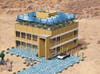
The Oasis
PROBLEM: DESERTIFICATION / SOLUTION: POSITIVE IMPACT HOUSE
DESIGNER: ROBERT FERRY
One of the paradoxes of global warming is that even as it leads to flooding in some parts of the world, it will lead to severe water shortages in others. According to the United Nations, climate change is likely to reduce rainfall in drylands, which cover 41 percent of the land on Earth, including much of the American West. In 2007, the U.N. estimated that desertification could eventually affect some one billion people in at least 100 countries.
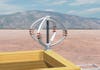
Yet architect Robert Ferry of Studied Impact Design, which operates out of Pittsburgh and Dubai, proposes that deserts need not be unlivable, or even uncomfortable. His Positive Impact House, a 3,200-square-foot single-family home, is not only designed to draw enough water and cool air from the environment to sustain five people, it will also send energy back into the grid.
Surplus Power
The water comes by way of an atmospheric water generator, similar to commercial units used today. These devices run refrigerant through metal coils, which attract condensation that is then funneled into a purifying holding tank. (The desert air is moister than you might think; Dubai, for example, averages 80 percent relative humidity at certain times of day in January.) Two generators would produce enough freshwater for drinking and showering, and the shower water would be recycled for use in flushing toilets and growing food. (A related composting system would also generate biogas for cooking.)
Most of the year, the natural flow of air through the house’s windows would be enough to cool it. But during the hottest months, a fan would draw hot outdoor air into an underground chamber, where the temperature is 50ºF to 60º year-round, and then into the basement and up through floor vents. As the cool air warms back up again, it rises and escapes through a 200-square-foot interior courtyard, whose slim vertical cavity would create a wind tower.

Roof-Mounted Solar Cells
The 24 panels of roof-mounted, sun-tracking, concentrated photovoltaics, which use lenses to magnify solar rays by a factor of as much as 2,000, would be capable of generating all of the 80 kilowatt-hours of electricity the homeowners consume daily. Eggbeater wind turbines on the roof would produce another 40 kilowatt-hours. The extra energy would help with any sudden need for additional power, but on a normal day they could pump it back into the grid, thereby generating income. In the U.S, a homeowner sending 40 kilowatt-hours of energy to the grid every day would earn as much as $3,000 annually.
Nearly all of this technology is in small-scale use today. A nonprofit group called FogQuest is harvesting fog to provide water to Ethiopian villages. In Zimbabwe, the Eastgate Centre shopping mall uses huge, perforated, chimney-shaped structures to draw air in from the outside. (Zimbabwe is hot, but air that moves is cooler than stagnant air.) And in Orange County, California, the Groundwater Replenishment System makes sewer water suitable for drinking (gwrsystem.com).
Breezeway

Sustainable Habitat 2020
PROBLEM: POLLUTION / SOLUTION: SUSTAINABLE HABITAT 2020
DESIGNER: PHILIPS DESIGN
In the coming decades, advances in pollution control may not be enough to counteract the air- and water-poisoning effects of dual explosions in population and energy consumption. Within 20 years the number of cars in the world will rise to two billion, and most of them will be powered by gasoline or diesel. By 2100 air quality in Southern California is expected to violate federal standards 50 more days a year than it does now. Pollution will be particularly vexing in fast-developing countries like China, which according to the World Bank is already home to 20 of the 30 most polluted cities in the world. In one third of China’s cities, for example, the groundwater is contaminated. Buildings are part of the problem too. The nonprofit group Architecture 2030 estimates that the residential-building sector is responsible for about a fifth of global greenhouse-gas emissions.

Multifunctional Exterior Skin
In response to these challenges, designers at the Dutch electronics giant Philips imagined Sustainable Habitat 2020, an apartment building engineered to make life healthy even in the smoggiest urban environment. “The question we’re posing is a depressing one,” says Clive van Heerden of Philips Design. “At this rate of urbanization, what do you do if the pessimists are right? How do we begin to start making buildings sustainable?”
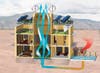
The high-rise apartment tower, composed of hundreds of 431-square-foot units, is intended for future Chinese megacities. The multifunctional exterior skin is the most important part of the structure. Dotted with suction-cup-shaped “funnels,” it forms a membrane between the indoors and outdoors that controls the inflow of light, air and water.

Green House
The funnels are embedded with photovoltaic cells and sensors, which track humidity, wind direction, and the brightness and angle of the sun. As the sensors detect changing weather conditions, they direct the funnels to change into the most effective shape for the task at hand. For example, on clear days, the funnels follow the path of the sun like flowers, transmitting light indoors and generating enough solar power to provide all the building’s electricity. (Energy stored during the day is used for lighting at night.) When it rains, the funnels change shape to become water-capturing cups. As rain trickles into the cones, the water is pumped to a cell structure behind the facade, where it is filtered, stored, and channeled into a closed-loop system in which everything, even toilet water, gets recycled. When it’s breezy, the funnels elongate into a trumpet shape—a natural wind tunnel that directs air through a filter and then indoors. (When it’s sunny and breezy, the funnels multitask.)
Other architects have begun working on projects in the same spirit as Sustainable Habitat 2020. The San Francisco firm IwamotoScott Architecture, for example, has proposed a low-rise dwelling called the Jellyfish House for a decommissioned military base on San Francisco Bay’s Treasure Island. The project’s creators say the house, with its permeable skin, will be like a living creature (iwamotoscott.com).
![The translucence of exterior wall cells [at right] can be adjusted by touch. The interior wall [blue] works as a water tank, purifying and storing rainwater captured by the funnels on the apartment's exterior.](https://www.popsci.com/uploads/2019/03/18/JSHM2PCS6RZVTQX4ZDOESLMELI.jpg?auto=webp&optimize=high&width=100)
Cell Walls