The United Arab Emirates plans what would be the first sustainable zero carbon city
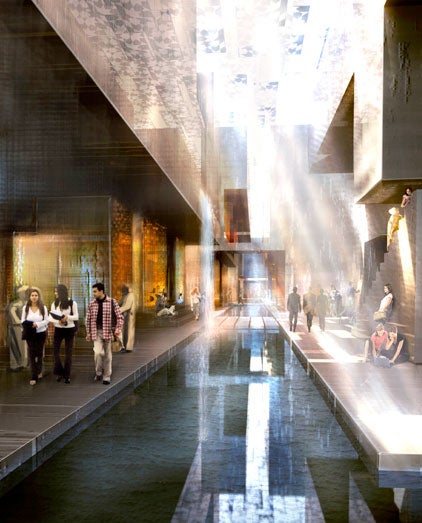
Masdar Initiative The narrow streets planned for Masdar City will keep the air from stagnating. Foster + Partners

The United Arab Emirates is a small federation of seven states on the southern end of the Persian Gulf. Its reserves of oil and natural gas have allowed the nation to prosper economically. In recent years, the country has seen a boom in massive constructions: The world's tallest skyscraper is scheduled to be completed in late 2008. Other superlatives include the world's largest mall, an indoor ski slope and a series of man-made islands off the coast made from dredging hundreds of millions of tons of sand from the Gulf's bottom. One of the reasons these projects have moved forward with such speed is the near total lack of environmental regulations in the U.A.E. states. Last month, a new project broke ground outside Abu Dhabi in the hopes of reversing that trend: Masdar City, the world's first zero carbon, sustainable community.

Building a sustainable city is a formidable challenge, but building one in the desert, miles from the sea where there is no fresh water or soil to speak of is a challenge unto itself. A London architecture firm has been at work on the designs for the past year. The city will include low, clustered buildings cooled by wind towers oriented in a such a way as to give the right balance of sun and shade. The streets will be exceedingly narrow to keep the air from stagnating. Cars will be banned. Waste water and garbage is to be recycled. A light rail will shuttle residents from Masdar to Abu Dhabi.

It is an exceptionally ambitious project, but if any nation can do it, it's likely the U.A.E: a country which has proven that ambitious projects are not insurmountable challenges. Still, whether this project is a serious look at sustainability or an exceedingly expensive public relations display remains to be seen.

Via PR Inside

Want to learn more about the environment, solar energy, sustainability, and more? Subscribe to Popular Science and enter to win $5,000!

3 Comments

DarkFx

from Winnipeg, Manitoba

Seems like a Mirage to me, or a futuristic conception, either way our dreams make shape. Best Idea Yet.

The best guess is a Theory.

EnviroVhargeze

from San Francisco, California

At least the UAE is making the attempt!

DaJBags

from Boone, NC

I can almost be certain that the UAE will be able to do this and have the technology to get it done. I do feel like it will not be the utopia they might be anticipating. That means that everything that they use must be capable of complete disassemply and reuse of material if they are going to "recycle garbage". I don't know if we have the technology to do that with everything (computers chips, plastic bottles with printed labels, white paper with ink, etc.)
As far as having the capital to make an incredible community, they have plenty of funds available. This, suspiciously, makes me think they are using this to experiment with investments in greener practices. Either way, I don't foresee any bad outcomes in these plans.


Download Our iPhone App

Stay up to date on the latest news of the future of science and technology from your iPhone with full articles, images and offline viewing


Follow Us On Twitter

Featuring every article from the magazine and website, plus links from around the Web. Also see our PopSci DIY feed


Become a Fan On Facebook

Share links with friends, comment on stories and more


November 2009: Astronaut 3.0

Inside NASA's astronaut bootcamp and the grueling new training regimen for deep space. Plus, ten young geniuses shaking up science today, one writer's quest to analyze every man-made chemical in her body and more.

Check out the issue's full contents online here

Popular Science Photo Pool


Share your photos in the Pop Sci pool at www.flickr.com!
tags_sprite.png
POP_embeddedForm_cover_May09.jpg