Dead Guys Sound Off On Copyright
Long before DRM-cracking and Creative Commons, thinkers like Gutenberg, Kant and Locke started the freedom of information debate. A new site archives their really old ideas
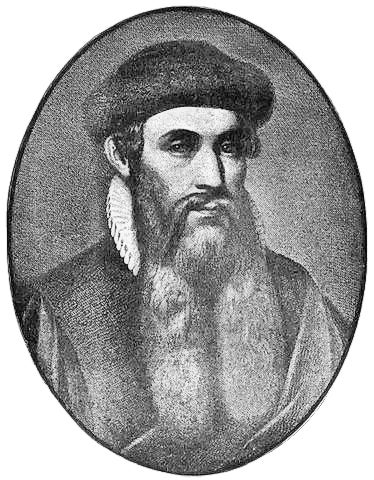
Arguably the most heated and oft-discussed topic in regard to the Internet and all that it has become is the one of copyright. DRM, the RIAA, Creative Commons—you likely can’t go a day without reading about a cracked cipher or a new business model in the face of illegal file sharing.
Copyright has undoubtedly entered a new era of evolution in the past ten years because now it is no longer the province of a select few. Anyone with a computer has the power to copy and distribute media, so it effects us all. What better time, then, to look back through the years to find out just how far we’ve come. That’s the aim of the Primary Sources on Copyright (1450-1900), a newly launched website home to high resolution scans and translations of more than 10,000 pages of primary source material, reaching all the way back to the thirteenth century.
Selected by a team of international researchers led by historians and lawyers from the University of Cambridge and Bournemouth University, the site offers to the public original papers that have long been archived in libraries across the world. Fifty core documents were chosen each from Germany, France, and Britain, along with twenty from Italy and the United States. Each has been scanned, transcribed, translated, and annotated with related documents. Many of the great minds of the past 500 years are represented: Machiavelli, Luther, Kant, Locke, Balzac, and Hugo, for example.
The hope of the site is not just to provide a useful resource for scholars and historians, but to be a wellspring to inform debates worldwide, whether among lawmakers or IMers. We have come a long way since the invention of the printing press—this site is an invaluable way to remember that.