Build It: The Persistence of Vision Wall Clock
Make a wall clock with a mesmerizing display
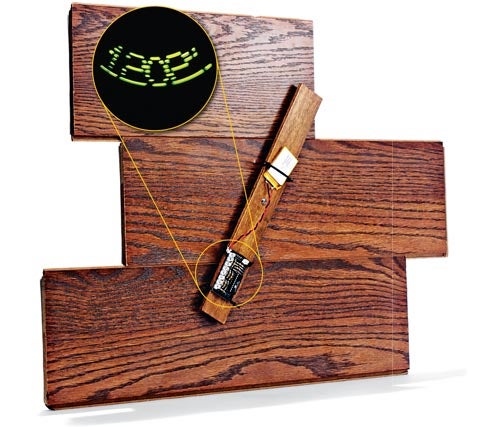
Throw out your old wall clock. You’ll be bored with it the moment you’re finished assembling your own persistence-of-vision (POV) clock. Projects based on POV—the phenomenon by which your eye very briefly continues to see an image after it has disappeared—use a moving display to show what looks like a static image. But instead of featuring only a single fixed message, this model shows you the current time on a continuously updated rotating display.
Just program a POV kit from Adafruit Industries ($17.50; adafruit.com) and mount it on a motor-powered spinning paddle. (We’ve already written the code that outputs the time—you can download it from popsci.com.) The clock’s backing is left to your creative hands to build; we made a faux floorboard enclosure. No matter what you choose, though, once it starts spinning, you won’t be able to take your eyes off it.
Build Your Own Space-Age Clock
Time: 7 hours
Cost: $83
Difficulty: Medium
Space Age Clock
1. Assemble the POV kit. Substitute eye-friendly green LEDs for the red ones in the kit. Solder the JST right-angle connector to the POV kit’s battery terminals.
2. Program the POV kit’s microcontroller with the software we’ve written ( download here ). The software is preprogrammed for a start time of 12:00. You can change it to the correct time before programming the microcontroller.
3. Mount the motor on the back of the clock. Build the motor-speed controller using the schematic provided on popsci.com. Connect it to the motor and the power supply.
4. Plug the battery into the JST right-angle connector on the POV kit. Turn on the power supply, and adjust the motor-speed controller until the POV display is easily readable.
5. Plug the battery into the JST right-angle connector on the POV kit. Turn on the power supply, and adjust the motor-speed controller until the POV display is easily readable.
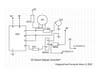
POV Clock Schematic