The Microfactory can cut patterns uploaded via Bluetooth
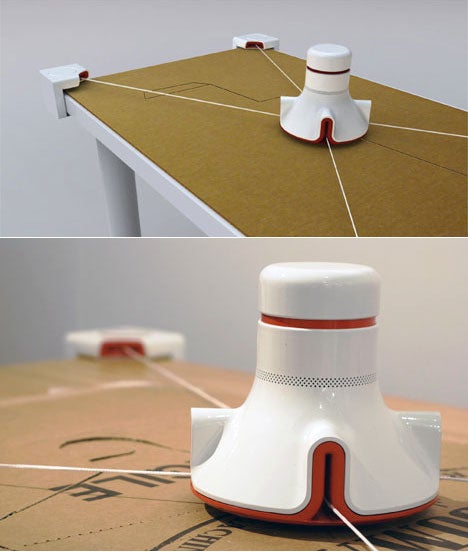
Microfactory Cutter DK Ahn's tabletop cutting device can create flat-pack patterns from downloaded plans. DK Ahn

A new tabletop cutting device promises to make at-home fabrication as easy as Ikea. Microfactory MOW is a portable tabletop cutter that can cut patterns from thin sheet materials, including cardboard, wood, and polypropylene. Even better, designers can share their patterns online and also upload new designs to MOW via Bluetooth.

The device is the brainchild of DK Ahn, a designer and graduate of London's Royal College of Arts. She hopes that MOW can help people reuse materials at home, and avoid the current supply chain required to bring products to consumers. Fast Company remains a bit skeptical about whether people will jump onboard with that agenda, but adds that MOW could take advantage of many good designs which are already flat-pack.

Such technologies may herald a new age when manufacturing leaves the industrial assembly lines and moves into the home for DIY, create-on-demand production. We're eager to see this, along with 3-D printers and other desktop factory technologies become the norm.

[via Fast Company via Core77]

Want to read more articles like this, plus tips and tricks, home hacks, DIY projects, and more? Subscribe to Popular Science today, for less than $1 per issue!

6 Comments

I'd think that it would have to be able to cut thicker and more varied materials to be realistic (plastic, laminates, wood, some metals).

It would also be nice to see a demo of something more practical than a cardboard coat hangar.

That was a pretty weak video. From all the set up and babying the device it'd be a zillion times easier to break out a knife.

Easier yes, but not as cool as watching this little gadget move around on its own. I am also amazed at how that have turned large CNC devices into this little one...even if it does make weird cardboard hangars.

Just curious

I want one... I like the idea of the precision possible with this product, even if only to make templates for cutting harder thicker stuff. With the right speed of movement, high speed motor with high torque, and the proper cutting bit, you could cut thicker materials. Cutting thicker materials could also create high heat due to the friction applied to the bit, shortening the life of it. This is ideal for the person that can visualize but not create an idea, and the person that cannot handle or does not have the knowledge to operate other tools.

__________________________________________________
if you have to ask why, then you probably wouldn't understand the answer anyway...

www.renaissanceribbons.com

Popular Tags

Regular Features


138 years of Popular Science at your fingertips.

Innovation Challenges


Popular Science+ For iPad

Each issue has been completely reimagined for your iPad. See our amazing new vision for magazines that goes far beyond the printed page


Download Our App

Stay up to date on the latest news of the future of science and technology from your iPhone or Android phone with full articles, images and offline viewing


Follow Us On Twitter

Featuring every article from the magazine and website, plus links from around the Web. Also see our PopSci DIY feed


February 2012: The Future of Fun

Science is reinventing play, from extreme sports to gamification to ridiculous roller coasters to the playgrounds of tomorrow, and this issue is chock full of fun. Also, on a less fun note: Did global warming destroy my hometown?


circ-top-header.gif
circ-cover.gif
bmxmag-ps