This Bluetooth extender improves range up to a mile away
Modify a USB Bluetooth adapter to create a Bluetooth extender.
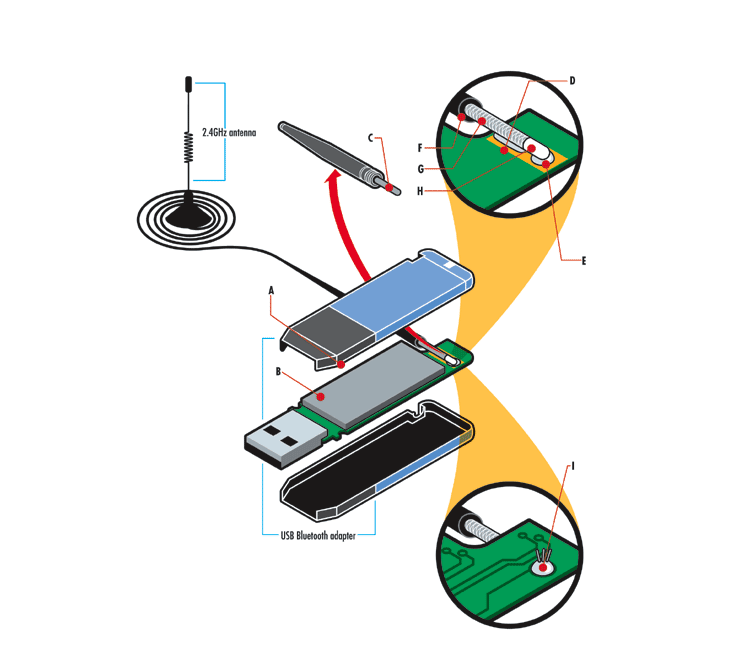
This story has been updated. It was originally featured in the November 2004 issue of Popular Science magazine and involves outdated technologies and services.
Bluetooth is best known for short-range, low-bandwidth wireless jobs: connecting a cellphone with a headset or syncing a PDA with a nearby computer. But just as a flashlight’s reflector focuses a small bulb’s light to make it appear brighter, the right antenna can boost a weak wireless signal. So I detached the stock antenna from a Linksys USBBT100 Class 1 USB Bluetooth adapter ($70; linksys.com) and replaced it with a larger HyperGain RE05U 2.4GHz antenna ($15; hyperlinktech.com). With that simple mod, I can make a Bluetooth connection up to a mile away—about 4,950 feet farther than other Bluetooth extender options. Bandwidth isn’t increased, so it’s not a WiFi killer, but now I can connect to my Bluetooth devices from anywhere in the house or yard. (See bluedriving.com for more Bluetooth projects.)
- Dept: Void Your Warranty
- Tech: Bluetooth antenna
- Base cost: $85
- Time: 30 minutes
- Difficulty: dabbler | | | | | master (Editor’s note: 3/5)
Instructions
1. Use a flat screwdriver to gently pry apart the case along its seam (A in the image at the top of the story).
2. Remove the electronics module (B) from the case.
3. Use a soldering iron to heat up the existing antenna cable (C), and gently pull it from the shield platform (D) and antenna feed-thru hole (E).
4. Press a desoldering braid against the circuit board to clear excess solder from the shield platform and hole.
5. Strip the rubber outer insulation (F) of the new coaxial cable.
6. Trim back the outer shield (G), leaving just enough to reach the shield platform.
7. Add a small amount of solder to the shield to make it semisolid.
8. Strip the cable again to expose the center conductor wire. Leave a little of the plastic insulating layer (H) between the shield and wire to prevent electrical shorts.
9. Insert the wire into the thru-hole, then bend it 90 degrees so that the shield rests on the shield pad.
10. Solder the shield to the pad. Don’t let the iron linger too long or you could melt the insulating layer. If you don’t get the solder applied within 30 seconds, wait a minute before trying again.
11. Flip the board over, and solder the center wire securely in the thru-hole (I).
12. Clip the excess wire poking through the hole.
13. Place the module back in the case, and reassemble the two halves. Use tie-straps, glue or tape to hold it together if needed.