The Times's writer claimed Tesla's network of charging stations wasn't much help in the cold, but the company says that's not true.
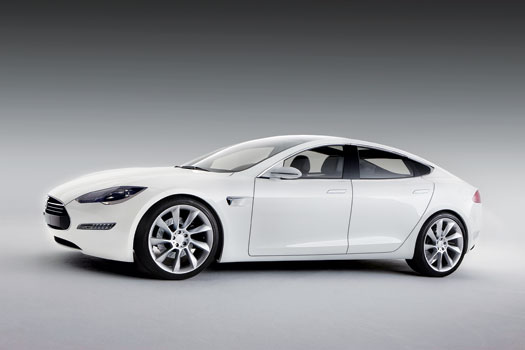
Tesla Model S Tesla

Elon Musk--CEO of Tesla and SpaceX, potential Bond villain, possible Iron Man ally--is in a very public spat with the New York Times. After the paper published a less-than-flattering account of a chilly road trip in the Tesla Model S electric supercar, Musk took to Twitter to accuse the writer of falsifying his account to make a better story. Now he’s written a lengthy blog post, replete with maps and annotations, which jointly accuse Times writer John M. Broder of making things up.

Broder has already replied to Musk’s tweets earlier this week, so we’ll get to him in a second. But Musk’s new blog entry is a major salvo in the fight--and an interesting lesson in managing your message.

The point of the article was to test the performance of new Supercharger stations, which Tesla installed along a stretch of Interstate 95. The carmaker says Americans won’t embrace electric cars until they’re as convenient as regular ones, and its Supercharger "filling stations"--where Tesla pays for your electricity--are a crucial step toward realizing that goal. But weather and traffic can affect the car battery’s performance, which can affect its range, and Broder found himself calling a flatbed truck to tow the car when it ran out of juice.

Musk’s blog post pokes holes in his story, using data that the billionaire CEO says was harvested from a car data logger. The company started using them in media test cars after an unfavorable review, which Broder does not seem to have known. “He simply did not accurately capture what happened and worked very hard to force our car to stop running,” Musk says.

He claims the car’s “state of charge” log shows the Model S battery never drained, including when Broder called the flatbed truck; he drove at speeds from 65 mph to 81 mph for a majority of the trip, faster than the article claimed; kept the cabin at an average temperature of 72 F; and so on.

After Musk’s initial accusations, Broder fired back defending the story. “Knowing then what I know now about the car, its sensitivity to cold and additional ways to maximize range, I certainly would have treated the test differently,” Broder wrote. “But the conclusion might not have been any better for Tesla.”

And that’s really the key here. This story was Tesla’s idea, meant to drive up consumer confidence that a car with no internal combustion engine can reliably get you where you want to go. It just didn’t turn out like they expected. Since the spat started a few days ago, a lot of writers--including us--have asked for additional test drives, so we’ll see what happens next.

Google Map Of Trip
Google Map Of Trip:  Tesla Motors

Want to keep track of the latest concept cars, automotive innovations, and more? Subscribe to Popular Science today, for less than $1 per issue!

9 Comments

There is no shortage of internal combustion fans who are trying to fan the flames on EV's to discredit them. That's because most have their hands in the Big Oil pot and don't want EV's to begin taking their money!!!

I drive a LEAF and don't even have the fast charger installed and don't need it.

I get over 100 miles range on it if I drive carefully in the city and have no problem with that at all since I can always charge it additionally using the included 120 Volt cord in an emergency.

EV's are the wave of the future and internal combustion polluters need to stand aside!

And no I pollute nothing as charge mine via solar power panels which power 103% of my home. I am a NET producer of energy and plan to keep it that way till I'm dust.

So my mpg is infinite so long as the sun is shining. If it's not it won't matter will all be dead.

hahaha E.Musk is like... "what now? bitch!"

but seriously its cuz of those non educated rich oldtimers who do not like change in their wallets that science gets some bumps like that... but wait, new tech is getting more complicated so they cant keep up and are making mistakes like that (which would have passed few decades ago, but not anymore ^^ muahaha)

Cant make money like this nomore, Scrooges...

---
(Type 0.72) = We are still just cleaver monkeys!

I don't really care which of these two "gentlemen" is right. But I would like to see more realistic test drives. Give it to a soccer mom for a week. How about maybe a doctor for another week? Etc. To me a test drive with this kind of new technology is somewhat useless without real-life test drives. What happens when the soccer mom carries in groceries and gear and 2 kids and forgets to plug it in overnight? Etc. I'd prefer to see a test-ownership than a test-drive when we're talking about technology that requires you to change the way you live your life (plugging in at home or work or on the road).

Yet, I have a question that is more pertinent to me...

What is the experience going to be like after 1, 2, 5, and 8 years of regular everyday use? Certainly that cannot be said yet for the Model S, but that's my primary concern if I were to buy a car with a big battery pack.

With technologies that evolve very quickly, like batteries now are doing and computers have done in recent decades, one has to ask that question. But it is very different to spend $1500 on a nice laptop that will have to be replaced in 3-4 years and to spend at least $60,000 on a car with a giant expensive battery pack.

If you look at Tesla's pricing for the Model S (and strip out the tax credit), then their 40 kWh battery car costs about $60,000. Bump up to the 85 kWh battery car and you'll pay $80,000 instead. That $20,000 increase for 45 extra kWh of storage implies to me that the cost of the cheapest car's battery pack is probably around $18,000. And my concern is at what point will I have to replace that hugely expensive battery pack just to keep my car driving an acceptable amount?

I would also be concerned that if I just waited 2-3 more years they would have much better batteries, so why buy now? Until I see battery technology start to flatten out a bit more, I would be very apprehensive about getting into bed with a giant battery pack for the next 5-8 years.

^ John is that you?

seriously, everything has a begining... you have to credit Tesla for making the BEST begining possible.

you do not like EVs, dont drive them. Combustion isnt going anywhere... its like propeller aircrafts didnt die out when jets came out... they just got better with time... its what happening with Electric Cars... EVs have lot more potential, they arent just refined to that point yet...

---
(Type 0.72) = We are still just cleaver monkeys!

The New York Times has never once published a single word of truth in its history since 1851 and billions of words published.
The Times is a yellow opinion rag... The National Inquirer has more credibility.

vt007, if you're referring to me when you ask "^ John is that you?" and, if I infer correctly that you're referring to the reporter in question in this story, I can tell you that I am not him. As you can see in my profile, I've been commenting here for over 5 years, so I'm not just some reporter starting up a new screen name to flame people.

I am, however, the owner of a tech company, so my opinions about tech items often run deep. I love tech, science, efficiency, etc. But most specifically, I love tech and science that is not only actually usable, but truly helpful to people when measured totally and completely. As such, my main issue with test drives is that they often bias people towards products without being able to see the long-term costs involved.

If batteries ever get to the point where they make sense, I'll be the first in line to get such a car. But to the extent that all future details of costs and issues with them are often glossed-over, at best, I am bothered by many tech reviews. I feel that 90% of "tech products" today don't actually help their customers. The purveyors basically create a "problem" that people didn't know they had, and then provide people with the solution for that problem. Usually this costs people money and a good deal of their most precious resource - their time.

What's more, because tech advances are coming so fast, people who buy in replace things much sooner than was happening decades ago. It draws a lot of people into a much faster cycle of "stuff replacement" than in past decades. As such, more time is spent using these new tech toys, and more time is spent earning funds to pay for them, with less time left for what I view as actual quality people interaction. And since I'm a big believer in quality people interaction as a bedrock for society, you can imagine that I don't much care for many of the promises made by much of today's tech.

As for EVs that run on batteries... I may buy one someday. But to be honest, I think it more likely that I'll buy a hydraulic hybrid first. I think the hydraulic hybrid will cost less up front than electronic energy storage vehicles, with lower replacement costs, and equal or greater durability. We'll see if Peugeot actually starts selling the first mass-created hydraulic hybrid in 2016, as currently planned, and if it really can get anywhere close to their estimated 117 MPG in city driving. We can only hope.

@vt007: Perhaps, if you learned to express yourself coherently, and without profanities; you too could become a "rich oldtimer" one day. Meanwhile, the only one who appears "uneducated" is yourself.

@marcoreid

you do realise that test drives are like a pc specs, that only shows numbers and not the full potential of software or games that programmers can make from it...

but yeah i agree on the adoption rate thingy, society plays a big role in it ^^

and oh my god you are over 40s for not understanding the sarcasm in "John is that you", but at least you have the dessency by putting some facts in your responce and i respect that ^^

@tundrasea

fuck off, english is my 3d language that im not even counting as fluent as i never lived in an anglophone country...

---
No facts, No response...

@vt007: You've just confirmed that you're multi-ignorant.


June 2013: American Energy Independence

Five amazing, clean technologies that will set us free, in this month's energy-focused issue. Also: how to build a better bomb detector, the robotic toys that are raising your children, a human catapult, the world's smallest arcade, and much more.


Online Content Director: Suzanne LaBarre | Email
Senior Editor: Paul Adams | Email
Associate Editor: Dan Nosowitz | Email
Assistant Editor: Colin Lecher | Email
Assistant Editor: Rose Pastore | Email

Contributing Writers:

Kelsey D. Atherton | Email
Francie Diep | Email
Shaunacy Ferro | Email

circ-top-header.gif
circ-cover.gif