How A Tiny Group Of Designers Built The Most Efficient Racecar In History
An inside look at the DeltaWing, the boldest--and most polarizing--racecar design in decades
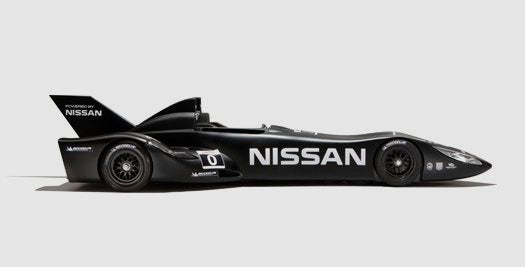
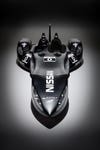
The DeltaWing
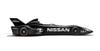
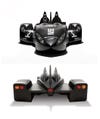
At 3 p.m. on the third Saturday in June, 56 cars stream past the starting line of the 24 Hours of Le Mans in a multicolored, roaring blur. Two hundred forty thousand spectators have gathered around the 8.5-mile circuit in central France for the 80th edition of the race. Cars of wildly varying speeds will compete in four distinct classes, with the fastest entries vying for overall victory in a race that lasts an entire day and night. It is, in effect, four races happening simultaneously. Drivers must contend with passing and being passed by cars from other classes for the duration. Leading the pack are the Le Mans prototypes, purpose-built thoroughbreds capable of reaching 210 miles per hour. The slower half of the field consists of race-spec versions of street-going Ferraris, Aston Martins, Porsches and Corvettes, entrants known generically as GT cars. Starting in 28th place is a car that belongs to none of the official categories. Called the DeltaWing, its slender, black, needle-nose fuselage and wicked dorsal fin make it look more like a missile than a racecar. And if it’s as fast and efficient as its creators claim, it will challenge a century of racecar design tradition.
For most of its history, Le Mans has been a proving ground for new forms of automotive technology. This year, two of the fastest cars in the race are hybrid-electric vehicles. The Audi R18 e-tron quattros feature electric motors attached to their front axles. The Toyota TS030 Hybrids carry supercapacitors that soak up energy while braking and discharge it for a quick burst of extra speed on straightaways. But the DeltaWing is an order of magnitude more radical than either of these cars. Its novel shape enables it to clock competitive lap times with an engine only slightly more powerful than the one in a standard family sedan. As the car’s designer, Ben Bowlby, puts it: “The DeltaWing goes the same speed with half the weight, half the drag, half the power and half the fuel consumption.”
Technically, the DeltaWing isn’t competing with the Audis or Toyotas or any other cars in the field. It’s the 56th entry in a 55-car race, filling the single demonstration slot reserved for experimental vehicles. Today the DeltaWing’s three drivers will aim to complete each 8.5-mile lap in three minutes and 45 seconds. This is, for the record, about 20 seconds slower than the Audis and Toyotas. By cranking up the boost in the turbocharged engine, the DeltaWing could easily go faster—a lot faster. It could also have been fitted with a much bigger fuel tank, which would have allowed it go twice as far before pitting for gas. But to avoid any chance of a noncompeting entry upstaging the actual racers, officials have given the DeltaWing a target average lap speed of 135 miles per hour.
The car easily hit the target during practice. Surviving the race, though, will be a colossal challenge. The DeltaWing’s four-man core design team has been working on the car for barely a year. Virtually every component was designed and built from scratch. The crew was still fitting parts to the car the day before it first turned a wheel, less than four months ago, and Nissan, the car’s primary sponsor, didn’t officially come on board until after the inaugural test. Top teams prepare for Le Mans by testing their cars for 24 or even 36 hours nonstop. The DeltaWing ran about 12 hours total before arriving here. What are the odds that a hastily assembled prototype representing the biggest departure from racing tradition in decades will complete one of the toughest tests of endurance in all of motor sports? “Nobody comes to Le Mans not to finish,” says Jerry Hardcastle, a chief engineer with Nissan, the supplier of the car’s engine. “But I will be smiling every minute the car lasts after two hours.”
The Long Game
Under the circumstances, teething pains are inevitable. During the first qualifying session on Wednesday, driver Michael Krumm put all four wheels on the curb at a fast right-hander and launched the DeltaWing into the air. It flew 20 feet before landing so violently that the onboard fire-suppression system went off. Then, this morning, during a warm-up session held in the rain, an electrical box shorted out when water leaked through a bad seal.
Now, a half hour into the race, the DeltaWing is already having trouble. Engineers staring at the dozen laptop computers in the team’s cramped garage, poring over the performance diagnostics continuously beamed back from the car as it rounds the track, spot a worrisome spike in water temperature. After several minutes of debate—it’s fine, let it run; no it’s not, it’s going to overheat catastrophically—an engineer makes the call: “We have to stop now.” As the mechanics prepare for an unscheduled pit stop, the DeltaWing comes into view on a TV monitor in the garage. The source of the trouble suddenly becomes clear: A plastic bag has gotten lodged in the radiator inlet. Maybe this car does have a chance of crossing the finish line. When Krumm slides into the pits, a mechanic yanks out the plastic bag, and the car roars back onto the track, with just 23 more hours to go.
* * *
Historically, transformative racecar designs have arrived about once every decade, each one changing both the physical shape of the cars and the nature of the sport. In the 1950s, engines moved from the front to the back of racecars, thus eliminating the driveshaft and optimizing weight distribution, which improved handling. In the ’60s, cars sprouted wings that redirected airflow to pin the tires to the ground for better traction and higher cornering speeds. The ’70s brought ground effects, which sucked cars toward the pavement even more effectively using underwings cut into the bottom of the chassis. In the ’80s, lightweight, superstrong carbon-fiber chassis became standard. But starting in the 1990s, electronic aids such as active suspension combined with aerodynamic advances to make racecars so fast and so dangerous—contributing to the death of Formula One icon Ayrton Senna in front of a television audience of 300 million people—that rule-makers began slowing cars down. They banned the most exotic electronic aids. They intentionally compromised aerodynamic efficiency. And since then, racecar design has stagnated. “Most racecars are exercises in staying inside the envelope,” says Ricardo Divila, a Brazilian racecar designer whose credits include Formula One cars, the technical apogee of the sport. “Look at airliners. Boeings and Airbuses look alike because they’re optimized within a very narrow window of specs. It’s the same with racecars.”
Featherweight
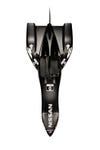
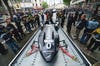
The DeltaWing, by contrast, is the boldest racecar design in decades. With fuel and driver, it weighs about 1,250 pounds, roughly half as much as a conventional Le Mans prototype. The needle nose and clean bodywork reduce drag to the point that the car can hit 200 miles per hour with an engine that puts out a mere 300 horsepower.
The DeltaWing is also the most polarizing racecar in recent memory. From the moment the project was announced in 2010, armchair engineers have said that the DeltaWing’s narrow front track and four-inch-wide front tires would compromise its cornering ability, that its lack of wings would rob it of downforce and make it susceptible to flying off the road. (Last year the team sent out Christmas cards picturing Santa behind the wheel of a DeltaWing and an elf asking, “Are you sure that thing is gonna turn?”) The car is aesthetically controversial, too. Although fans liken it to the Batmobile or an SR-71 Blackbird, detractors call it hideously ugly. “Flying penis” is a common epithet.
Yet Bowlby and his team say that their unorthodox car can help revitalize a sport that’s been shedding fans, losing sponsors and struggling to adapt to a world in which the profligate consumption of fossil fuels is increasingly unfashionable. “Racing is going to die if we can’t capture the imagination of a new generation of motor-sports fans,” says Duncan Dayton, the owner of an American Le Mans Series team and an investor in the DeltaWing project.
“We’re talking about a completely different idea,” the DeltaWing’s designer says—a racecar with the power of a family sedan that can still hit 200 mph. For most of the past century, racecar designers have prided themselves on their role in improving all cars. Technology perfected in racing, from fuel injection and twin-cam engines to disc brakes and seat belts, made its way from exotic racecars to everyday econoboxes. But as the pace of racing breakthroughs slowed, so did the process of technology transfer. Today racing is such a singular and rarified discipline that there’s almost no relationship between racecars and street cars. Could DeltaWing bridge the two by making low-power speed cool? It’s certainly difficult to imagine a street car directly modeled on the DeltaWing. But the DeltaWing could demonstrate better than any vehicle that speed and economy aren’t mutually exclusive. “We have half the horsepower, and we burn half the fuel,” Dayton says, “and we can still make the hair stand up on the back of your neck.”
Little Wing
Ben Bowlby, DeltaWing’s 45-year-old creator, is a British expat whose accent has been dulled by nine years spent living in the U.S. Upbeat and amiable, he has the supportive but faintly didactic air of a favorite high-school science teacher. At 16, he built his first road car by welding two Minis together in a small machine shop at his parents’ house in London. He raced cars of his own design before spending nearly a decade as chief designer at Lola Cars, which was then one of the world’s preeminent racecar manufacturers. In 2003 Bowlby moved to the U.S. to join former racecar driver Chip Ganassi’s sprawling motor-sports empire. In addition to serving as technical director of Ganassi’s Indy Car, Sprint Cup stock car and Daytona Prototype sports car programs, Bowlby also oversaw such unorthodox projects as the transformation of an abandoned Pennsylvania railroad tunnel into a wind-tunnel testing facility.
In 2008 Bowlby experienced an epiphany. He was attending the U.S. motorcycle Grand Prix, marveling at the sight of motorcycle riders leaning at 45-degree angles as they drifted through 100mph corners, tires squirming at the edge of traction. It struck him that any spectator, no matter how clueless, could see the courage and talent of professional bikers. Racecars, on the other hand, hide their drivers’ skills. Their giant wings produce so much grip that driving them looks effortless. The wings also generate a wake of turbulent “dirty air” that prevents cars from racing closely together, robbing races of drama. Bowlby wanted to get rid of the wings. What would happen, he wondered, if he mounted a single front wheel in the center of a super-narrow nose? The streamlined snout would reduce drag and cut weight. Plus, it would permit a wingless aerodynamic profile that would showcase the driver’s prowess, allowing him to slide more outrageously into corners and run closer to competitors.
This triangular profile—known as a delta wing planform—is common among Top Fuel dragsters and land-speed record cars. But those machines race only in a straight line. If they had to turn at high speed, wouldn’t they just topple over like a little kid on a tricycle? As Bowlby thought more deeply about the issue, he realized that the problem with most three-wheelers was not the number and arrangement of the wheels. It was the disastrously high center of gravity. So he conducted an experiment. He bought a pair of radio-control cars, modified one to run with a single, centered front wheel, and tested them both on a frigid winter night on the suburban streets around his home in Zionsville, Indiana. The battery-powered three-wheeler, with its low center of gravity, turned just fine. In fact, it cornered at higher speeds than the four-wheel version. Later, back at the Ganassi shop, computer simulations showed that a full-size car built on the same template should turn just as well.
Not For Everyone
Around the same time, a committee was set to select a new Indy car for 2012. Ganassi agreed to fund development of a prototype for submission. Under Indy rules, a vehicle with three wheels isn’t even considered a car. But Bowlby discovered that two small front wheels placed side by side would corner nearly as well as one bigger one. This still allowed him to minimize drag by shaping the car around a narrow nose. Tiny tires also initiated a cascade of design changes that progressively reduced the weight of the car. Smaller wheels meant smaller brakes and suspension components, which meant a smaller engine, which meant a smaller gearbox, which meant a smaller chassis, and so on. When Bowlby ran the numbers, he figured that his car could lap at competitive speeds with a puny four-cylinder engine. He’d set out to design a car that would show off the skill of its driver. He ended up engineering the most efficient racecar ever.
Supporters say the DeltaWing can help revitalize a sport that’s struggling to adapt to a changing world. When the Indy committee selected an utterly conventional car, Ganassi axed Bowlby’s program. A year later, Bowlby left the company to pursue the DeltaWing full time. Not because he expected to make a fortune; he just wanted to see it through. “I lost a lot of sleep over the project,” he says. “My wife would come out to the garage and find me driving that little RC car around, making sure it was doing what I said it would do. But my reputation was on the line. I needed to show people that I wasn’t a flake with a stupid idea.”
When Bowlby began looking for other venues for his car, Le Mans seemed like a natural home. Since the first 24-hour race around the Circuit de la Sarthe in 1923, the Automobile Club de l’Ouest (ACO), the entity that organizes the race, has promoted new technology. For years, Le Mans awarded a prize for an index of thermal efficiency according to a formula involving speed, weight and fuel consumption. More recently, the ACO created what it called the Garage 56 program for an inventive, environmentally friendly vehicle that would compete on an exhibition basis outside the rules governing the 55 conventional entries. So last June, Bowlby pitched his concept, and the ACO selected it over several hybrid-electric entries. The DeltaWing was in business.
* * *
Two hours into DeltaWing’s debut at Le Mans, Michael Krumm brakes hard while downshifting for the left-hand corner known as Indianapolis. But the gearbox doesn’t shift cleanly, and the car snaps sideways as the rear wheels momentarily lock up. Krumm quickly steers into the skid to corral the car and then safely carves through the corner. But over the radio, he explains that the gearbox is getting worse.
This is bad news. From the beginning of the car’s development, the gearbox, a remarkably small unit designed specifically for the DeltaWing, has been a problem. Krumm pulls into the pit for a quick fix, then heads back onto the track. But the gearbox is still acting up, so he stops again.
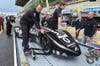
Mechanics swarm the vehicle. The crew discovers that a solenoid actuating the pneumatic shifter has died. It was probably a faulty part, not the result of overheating—but just to be safe, Zack Eakin, a member of the design team, fires up a Sawzall and carves off a piece of carbon-fiber bodywork, letting in more air to provide additional cooling. Thirty minutes pass before the repair is complete, but Bowlby seems unperturbed. The solenoid came from a third-party vendor. “It wasn’t a DeltaWing issue,” he says blithely.
Quality Control
Krumm puts the hammer down when he returns to the track, maxxing out at better than 190 miles per hour as he scythes between the guardrails ringing the deceptively narrow Mulsanne Straight. At this point, the DeltaWing is 14 laps behind the Audis and Toyotas in the lead. But the car has already lasted longer than most observers predicted. “It’s about random factors now,” says Simon Marshall, another member of the design team. “It’s just a matter of what’s thrown our way.”
Weighing In
Bowlby’s spot at Le Mans salvaged his project. With the imprimatur of the ACO, he began lining up investors. Chief among them was Don Panoz, the contrarian founder of the American Le Mans Series (ALMS) and holder of the patent for the nicotine patch. Duncan Dayton, the ALMS team owner, came on board, and Ganassi returned to the fold. But the most important investor, at least in terms of credibility, was Dan Gurney, the 81-year-old American motor-sports legend and founder of All American Racers (AAR), which builds military-spec metal and carbon-fiber parts for everything from motorcycles to unmanned aerial vehicles. “Building something this outlandish was right up our alley,” says Gurney’s son, Justin, who now runs AAR. “We’re doing it because everybody said it couldn’t be done.”
Bowlby and Eakin, who had also worked at Ganassi, left their families behind in Indiana and headed to California. Simon Marshall, another former colleague, drove west from Atlanta with his wife and two dogs. Together they rented an apartment near Gurney’s shop that they called Delta House and embarked on a grueling schedule of six-and-a-half-day weeks. (Ex-AAR designer John Ward worked 50 hours a week, which Eakin calls “part-time.”) Working in an office carved out of an AAR storage room, they started from the proverbial clean sheet of paper. “We didn’t have a library of parts or CAD data from some previous car to work from,” Bowlby says. “When our computers arrived, they were completely and utterly blank.”
Over the radio, the driver explains that the gearbox is getting worse. This is bad news.With the exception of Formula One cars, almost all modern racers are built primarily of parts bought from motor-sports vendors. But virtually nothing off the shelf fit the DeltaWing. There was no room for a steering rack, so Eakin designed a space-saving steering system vaguely similar to what’s found on a high-end go-kart. All of the suspension components are bespoke. (Due to the complex shape, each front upright took about a month to make.) The Performance Friction carbon-carbon front brakes are so small that they look like they’re from a model-car parts bin. The four-inch-wide front tires, made by Michelin, are one of a kind, as are the wheels.
In early March, seven months to the day after the first part was sketched out and barely three months before the race at Le Mans, the DeltaWing was ready for its greatest trial. Its carbon-fiber body still unpainted, the car rolled out of a trailer bearing AAR’s striped logo at Buttonwillow Raceway Park, a track north of Los Angeles. Representatives from the engine, tire and brake manufacturers that had signed on were there to see how their products performed. But foremost in the mind of everybody milling around the paddock was that nagging question: Is this thing gonna turn?
The honor of making the first run in the DeltaWing went to Gurney’s son Alex, a world-class sports-car racer himself. He climbed into the cockpit and, after stalling the engine twice, eased the car into a leisurely first-gear lap around the paddock. When he returned to the garage, Bowlby was there to greet him. His greatest fear was that the geometry of the front suspension would make the steering wheel difficult to turn.
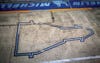
Guide Lines
“Is the steering light?” Bowlby asked.
“It did exactly what I wanted,” Gurney said.
Somebody shouted, “It turns!” The crowd broke into a ragged cheer.
Two other drivers also tested the car at Buttonwillow, gradually ratcheting up their speeds and generating reassuring technical data that helped persuade Nissan officials—who’d spent weeks speaking to Bowlby on a daily basis—to continue providing technical support for the car. The Nissan-branded DeltaWing was officially unveiled later in March. But for those who were there, Buttonwillow was the real debut. As Peter Brock, principal designer of the car Dan Gurney co-drove to a GT class victory at Le Mans in 1964, put it: “That was like seeing the Wright brothers’ first flight at Kitty Hawk.”
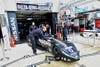
Into the Ring
Six hours and 75 laps into the race, and the DeltaWing is poised to make it into the night. Japanese driver Satoshi Motoyama replaced Krumm in the cockpit two and a half hours ago.
When the track goes green after a long safety-car period, Motoyama temporarily finds himself ahead of the leaders. The Audis storm past as they hurtle into a daunting, high-speed series of sweepers known as the Porsche Curves. Right behind them, looking for an opportunity to slip into the lead, is a Toyota hybrid. Motoyama sees the blue-and-white coupe in his mirror and stays far to the right. The Toyota pulls alongside him and starts to whistle by. Then the Toyota driver jukes hard to the right and clips the left front corner of the DeltaWing. Outweighed by more than 700 pounds, the DeltaWing pinballs off the track. The grass is like ice. There’s nothing Motoyama can do. The DeltaWing smacks into the wall and grinds to a stop. In the garage, the engineers and mechanics stare in disbelief at computer and television screens.
According to Le Mans rules, the car has to be driven back to the pit, and the driver is the only person who’s allowed to fix it. But Motoyama doesn’t have any tools, and he’s no mechanic. He also doesn’t speak English.
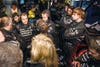
Rescue Squad
Team manager Phil Barker rides a scooter to the crash site to assess the damage. “Phil, what’s the status of the car?” chief mechanic Rick Perry radios from the pits. “Is it game over?”
Not quite, but close. The impact has deranged the front and rear suspension. In the garage, Bowlby and his cohort scramble to come up with a plan for fixing the car. Eakin and several crewmen, including a Japanese engineer who will serve as interpreter, set off to advise Motoyama through a chain-link fence. Over the course of an hour, Motoyama crawls all over the car in a desperate attempt to fix it. He yanks off bodywork. He unscrews components. He lets air out of the tires to improve traction. Again and again, he paces over to the fence for more advice. All the while, the cars still in the race zoom and whine by mere feet away, just on the other side of a low concrete berm.
Each setback for Motoyama triggers another confab in the garage. The interpreter-engineer receives instructions over the radio and passes them to Motoyama through the fence. Finally—amazingly—he’s able to install a manual differential lock (which had been fabricated two days ago for just this situation) that restores drive to the left rear wheel. But when he fires up the engine to drive off, the car crabs sideways, barely moving. The steering is too badly damaged to repair. When it becomes clear that nothing more can be done, Motoyama is in tears. Shoulders slumped, he abandons the car and climbs on the back of Barker’s scooter. As they ride off, the spectators cheer his effort.
In the garage, the team reacts with a curious mixture of disappointment and pride. “It was a shame to end that way,” Barker says. Marshall shrugs. “It was good as long as it lasted.”
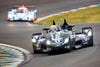
Curve Side
There’s no real dispute about the cause of the crash: The Toyota driver made a mistake. There were some extenuating factors. Side-to-side visibility in the prototypes is notoriously limited, and the small dimensions and odd shape of the DeltaWing made it particularly hard for other drivers to see. But the crew is not in an understanding mood. On a television monitor in the garage, the live feed from the race shows the Toyota that knocked the DeltaWing out of the race being attended to in the pits. “Hex on you,” Perry mutters. (Six hours later, he gets his wish, when the Toyota’s engine fails, forcing it out of the race.)
When Motoyama gets back to the pits, his eyes are puffy and red. Bowlby rushes over and wraps him up in a bear hug. “You are a star!” Bowlby says. “I’ll remember you forever for that.”
“Sorry,” Motoyama murmurs.
Bowlby gives him a paternal shake. “I’m sorry the car wasn’t stronger.”
The crew is in no hurry to pack up, and it’s early Sunday morning before most of them file out of the garage. Bowlby and Eakin are among the last to leave. They hug so fiercely that Bowlby’s feet leave the ground. Then they bump fists and wiggle their fingers in a private ritual. Bowlby dredges up a rueful smile. “It’s time for a beer,” he says, and they walk together into the night.
* * *
The only way the DeltaWing’s investors will ever recoup the nearly $10 million spent getting the car to Le Mans is to put it into production—to build a series of DeltaWings and sell them to racing teams. But who would buy it? DeltaWing investor Don Panoz owns the American Le Mans Series, which means he’s in a position to let the car race there. But the problem is that the DeltaWing doesn’t fit within any existing rules package, so somebody would have to develop an equivalency formula that allows it to compete against more conventional designs.
Alternatively, racing officials could do as some freethinking designers have been advocating for years: Junk the rulebook altogether, set a minimum weight or a maximum energy allowance, and let designers go wild. Right now, there’s virtually no chance that the conservative sanctioning bodies that run racing would sign off on something so subversive. But the DeltaWing could have a lasting influence precisely because it subverts the formula. Le Mans prototype and Formula One cars look the way they do only because that’s what the rules demand. Why not change the rules? Why not embrace the subversion? Why not use half the power and half the fuel to go just as fast?
Preston Lerner is a contributing editor at Popular Science.