Project Porsche
How do you completely disassemble a classic sports car and rebuild it better than new? You take a deep breath and dive in.
My carefully wrapped Christmas present in 1998 was a $4.95 issue of Hemmings Motor News , the thick, pulp-paper monthly classified listing of collector cars. Even if it carries a 21st-century date, each issue still looks like something you’d find on the toilet tank of a 1950s Sinclair station restroom in Tucumcari, New Mexico. So was this a cheesy gift from my wife? Hardly.
“You look bored,” Susan laughed at my bafflement. “You finished the addition to our house. You built an airplane. You’re playing around with models.” (No, no–the 1:48-scale plastic kit kind, not the double-breasted variety.) “You need another project,” she said. “Buy yourself a car to restore. A Ferrari. An Aston Martin like the one you had when you were a young stud. A Corvette, a Cobra ?”
Wow. I’d always wanted to restore a car, and my unfailingly perceptive partner, game for anything, was encouraging me to start at the top. Husbands who feel that permission to watch the Super Bowl is marital bliss don’t know what they’re missing.
But I didn’t want to get in over my head with an exotic car that required expensive specialist help. A hard-core anal compulsive, I’d always wanted to do that frame-off rebuild, totally disassembling a car, detailing every part and reassembling it to ? well, maybe not perfection, in this era of spare-no-expense professional restorations worth more than Monets, but at least to sanitary standards.
I also wanted a car that would provide a reasonable level of performance when I was done, not a 1950s classic that might have run strongly in fond memory–an XK 120, an MG TD, a Morgan–yet would make me turn to my wheezy old Saab whenever I felt the need to exceed the speed limit. So the choice was easy, particularly with my then-19-year-old car-enthusiast daughter, a Skip Barber graduate, chanting, “POR-shuh, PO-shuh, POR-shuh” in the background. I would seek out a restorable Porsche 911.
Ultimately, I found my car just 65 miles from home, in Long Island City, a shabby New York neighborhood near LaGuardia Airport, amid sidewalks littered with broken bottles, corner bodegas and stripped cars perched on milk crates at every other curb. The dealer’s wares, though advertised in Hemmings as “exoticars,” were a motley collection of dreadful Jaguar Mark sedans, ugly entry-level Ferraris, Cobra kit cars, decrepit Royces and Bentleys, poseur Panteras, neglected Porsches and phony fiberglass MGs. They were packed grille to bumper, fender to dusty fender in a dim, foul warehouse. The mechanical expertise of the place seemed limited to jumping dead batteries.
The car was a sad little rat. The mechanic started it, and it idled smokily at a warm-up setting; the haphazard Porsche threshing-machine clatter brought back memories. The interior was grungy, the driver’s leather seat split, the carpeting bunched and filthy, the glare shield terminally cracked, the rear bulkhead paneling waterlogged and crumbling, loose wires showing the harsh removal of an aftermarket amplifier and a boom box speaker rig that had been parked crudely on the jump-seat cushions, the engine compartment slick with spilled oil, the air-conditioner hoses dangling loose, the Guards Red paint cracked and faded where the Neanderthal PO (previous owner, in Porschespeak) had rigged a nose-protecting bra and then never removed it. The driver’s door sagged half an inch when opened, so he was probably fat as well, accustomed to using the door as a crutch.
Perfect.
I took the headlights out of their fender bowls to look for hidden rust. Ran a magnet all over the body to test for Bondo, the sandable plastic paste that body shops trowel over crash damage they can’t be bothered to smooth. (The magnet would stick to steel but not Bondo, of course.) Parked the car so that the sunlight hit it at the right angle to give away bodywork ripples when I sighted along the fenders and doors. Checked the vehicle identification number to find that the car had been built during the summer of 1983 in Stuttgart for the U.S. market–a very late SC, one of the last of the breed. Checked the engine number to confirm that it was the correct engine for the year. Looked for the dreaded spilled-acid corrosion under the battery tray. Jacked the car up and poked an awl at the bellypan in some famously vulnerable areas to check for rust-thinned metal ?
“I’ve never seen anybody do all that,” the dealer said–either admiringly or calculatedly, hoping to make me think I actually knew what I was doing.
I drove the thing around for barely five minutes simply to make sure it actually ran and tracked straight. No need to check compression, valve leakage, gearbox crunching, shock stiffness or tire condition. The tires were Sumitomos, a Japanese off-brand famed only for their cheapness and excellent adaptability for use as boat-dock bumpers. I had no interest in any of the obvious things that used-car buyers concern themselves with, for all of those components would be renewed, rebuilt, replaced before the car ever ran again.
Ship it, I told the dealer. Put the thing on a flatbed and send it to me. Oh, and how about a discount for not asking for a warranty? “Warranty ?” he laughed. “Warranty? No such thing, my man. You can bring your mechanics, you can examine the car all you wish, you can drive and test and check, but you buy and it is yours. Don’t come back. No warranty. No nothing.”
Well, what the hell. It’s a project car, not a grocery-getter.
Rebuilding a Porsche 911 engine is neither impossibly complex nor in any way counterintuitive. It can be done by anybody who has the time, tools, compulsiveness and common sense to do the job in a scrupulously clean, careful and organized fashion. Literally. Bruce Anderson, a respected Porsche technical expert, gives weekend-long, small-group, hands-on workshops in suburban San Francisco on how to rebuild Porsche 911 engines and transmissions. He once said to me, “I can teach anybody with a pulse how to do it.”
OK. So how do you actually do it? How do you ruin–which is essentially what you’re doing by taking it apart–a machine that Porsche will charge you $30,000 to replace? How do you do that and then somehow make it good as new again?
You take a deep breath and start. Disassembling the engine is easy: You just undo nuts and bolts in what will quickly become apparent is a logical order. (Starting at the top and working down is a reasonable approach.) A word of advice, though: Don’t trust to memory when segregating the parts as you disassemble them. Put everything (and its fasteners) into as many separate sandwich baggies as it takes, and it’ll take hundreds. Mark each baggie with the name of the part; if you don’t know what it is, just note its location, like “thingie that goes into crankcase near engine serial number,” if what you happen to have in your grimy hand is the oil-temperature sensor.
As you get deep enough into the engine to be removing important reciprocating and rotating parts that you’ll be reusing–connecting rods, pistons, wrist pins, rocker arms, cams and the like–number them according to which cylinder or side they came from and whether they were intake or exhaust. Number the cylinder barrels and heads as well, but don’t bother numbering the valves, which are going to be reground or replaced anyway. If you buy new parts, number them too, even if you’re simply assigning them permanently to an arbitrary cylinder position.
Since marker-pen scribbles are too easily wiped away by a variety of solvents, the best way to do this is with an electric scriber or a Dremel tool chucked with a fine grinding point. Scribe the number in a nonfunctional location-under the piston crown rather than on the piston skirt, say.
One other crucial tool that you’ll need during all this disassembly is a parts cleaner. I once rebuilt a British Matchless
trials motorcycle using the kitchen sink of my rented Philadelphia apartment as a “parts cleaner,” but it wasn’t a good idea. My landlady saw me off as I moved out several months later by melodramatically yelling, “I hope great tragedy befalls you.” It was a bit over the top, but a novel farewell. (Oh, and by the way, Mrs. Anselmi, you’ll be delighted to hear that I did get prostate cancer 30 years later, if that’s what you had in mind. But I do remain cured.)
A parts cleaner is simply a metal tub full of solvent–choose your poison, biodegradable or carcinogenic, green or clear, soapily helpful or deathly effective–with a small electric pump that recirculates the stuff and pushes it out of a gooseneck sprayer so that you can
submerge and scrub-brush squeaky-clean even the biggest engine parts. For somebody whose basic concept of engine rebuilding is “Clean it up and put it back together again,” a parts cleaner was the altar before which I daily did my mechanical ablutions.
One of the most important things to do to a disassembled 911 engine is to clean out all the oil galleries (passageways) cast and machined into the block and crankshaft. This requires a supply of “shop air”–the efflux of a compressor–and a couple of spray cans of carburetor cleaner. The big main oil gallery runs longitudinally through the right crankcase half and is blocked by hammered-in metal plugs. The plugs need to be removed–a tricky affair–and then replaced with new plugs once the clean-out has been accomplished.
There are also six piston squirters to clean out, little nozzles inside the cylinder spigots in each crankcase half that pump coolant oil onto the underside of the piston each time it happens by. The intuitive thing to do is to spray into the nozzles where they protrude from the block, but that’s a fool’s errand: There’s a check valve inside each nozzle that allows oil (or, in this case, carb cleaner) to flow out but not back in. You need to stick the long plastic extension spout of the spray can as far as possible down into the gallery feeding the nozzle.
All this lube-system cleaning is especially and enormously important if you are rebuilding an engine that has suffered a mechanical failure, or if the crankshaft was reground. Debris from the failure, or the grinding, can be lurking anywhere in the system. If you don’t get rid of it, there’s an excellent possibility of a catastrophic bearing failure within minutes of first start-up. Instant doorstop.
On the first warm, sunny April day, after a miserable winter, literally the first time our woodland plot was free of the lingering, filthy remnants of the deepest snowdrifts, I backed the Porsche out of the barn as it fitfully brapped and snorted through its yet-to-be-tuned carburetors. Its tail was aimed downhill straight at a small outcropping of sump-eating rocks. I hoped the brand-new brakes would work as the fat rear tires plopped out past the big sliding doors, off the raised barn floor and onto the ground.
They did, and I cautiously backed and filled till the car was headed toward freedom, away from two years of mechanical surgery and intensive care. I needed to take it out on the road, even if just for a few minutes. I had no license plates, no insurance, no registration, no inspection sticker, no nada. I didn’t even have my driver’s license. But one of the advantages of living out in the country is a spiderweb of untrafficked, barely paved back roads where the odds of running into a local cop are infinitesimal. And if I did, I figured I’d just wave and floor it.
A week later, after several increasingly casual forays onto my illegal loop of back roads, I almost ran into the porky town-police Caprice cruising past our driveway, probably for the first time in a decade. Fortunately, I was on my way to the post office in a legal car. Had the cop heard that some night rider in a fly yellow Porsche had been rattling windows? I’ll never know. I thought of pulling up and asking him but decided that was seriously pushing it.
When I bought the original oily red SC, the dealer in the depths of Queens had said, “It’s required that you register the car through me. I must send someone to the motor vehicle bureau and they will pick up your license plates.” No, I said, that wouldn’t be necessary. I wouldn’t be putting the car on the road for a couple of years anyway, so there was no need for license plates. He shrugged, glad to be done with it.
I popped the car’s title into our safe-deposit box and filed the bill of sale among my rapidly growing sheaf of restoration receipts, but a thought continued to nag at me: When I try to register this damn car, something is going to go wrong.
Indeed it did. The motor vehicle bureau lady in Newburgh couldn’t have been nicer when I showed up in May 2001 to get license plates so I could finally legally put the incomplete-but-running little coupe on the road. “This looks like it’ll be a fun car to have,” she said as I proudly showed her the photos I’d brought of the restoration (in case there was some question about why the car had been off the road for two years).
Check, check, check went her red-ink ballpoint on my filled-in application form. Until the end–the absolute bottom of the back of the page. “Uh-oh,” she said, “we have a problem. The dealer you bought the car from needs to sign this form.”
“Good lord,” I said, “I bought the car over two years ago. At best he’s a 130-mile round-trip away, at worst he’s retired or gone out of business. I’ve spent $70,000 on this project. What do I do if I can’t find him to sign it?”
Her five-days-a-week life as a fat-fannied bureaucrat behind a window grille was at that moment complete, rewarded as only a functionary’s lot can be. She smiled sweetly and said, “You cry.”
I hope she’s kidding. I fear she’s not.
But I had a secret weapon.
Thirty years earlier, I had bought a rare and unusual Ducati 350 Desmo racing motorcycle from a dealer in Montreal. Since I was the Ziff Davis Publishing Co.’s de facto “corporate pilot,” I had the keys to its twin-engine Aero Commander. So I flew the Shrike from New York up to Canada, bought the bike, and loaded it into the leather-lined cabin where billionaire Bill Ziff usually sat.
It was one of those trips that a pilot looks back upon in his old age and thinks, “How did I survive?” I’d taken most of the seats out of the airplane before heading to Canada, and the big, empty, rectangular corporate cabin afforded plenty of room for the bike. My friend Russell Munson was my copilot, and he and I tied down the motorcycle as best we could with several lengths of rope attached to whatever seemed at the time to be a substantial mooring but probably wasn’t.
Just south of Buffalo, Russ and I ran into an enormous line of thunderstorms. It was 10 at night, and the lightning was dazzling. Fortunately, we banked hard left soon enough to avoid flying into the storms. If we hadn’t, the motorcycle would have come loose instantly in the extreme turbulence and pounded the airplane to death from inside, and almost certainly would have killed a second friend who was sitting trustingly on the floor of the cabin behind the bike, engrossed in a paperback.
I flew all the way east to Boston, getting ever farther from New York, before finding an airport that the thunderstorms hadn’t yet reached and landing to refuel. By the time I taxied back out to take off from Logan International, the tower called and, thank you Logan, said, “One-Five Uniform, I think you’re gonna be better off holding on that taxiway a while. We’ve got a humongous line of thunderstorms coming in from the west.”
I considered saying, “Negative, give us a right turnout and vectors to the south, we’ll be on our way before they’re here.” It was, after all, 2 a.m. and I was tired, grumpy and devoid of judgment. (Nonpilots assume that control towers and air-traffic controllers give orders, but they in fact only advise, and unless it’s against the law, the pilot can buck their suggestions.) Fortunately, the first gusts of the approaching storm shook the airplane convincingly enough that I didn’t. We spent the next 20 minutes on that taxiway, pointing the airplane into the shifting gales while I throttled the engines to keep it from being blown backward by the lashing rain and wind.
Ultimately, the silver-lam motorcycle arrived at Westchester County Airport accompanied by three supremely tired travelers and little paperwork. I had a brand-new, unregistered and probably illegal motorcycle and a single scrawled receipt. In French.
From the brief period when I was an anthropology major in college, before I changed my nonhonors specialty to playing with cars, I knew that explorers working in the Gobi Desert in the 1930s often devised what they called “Mongolian dazzlers.” These were mock documents covered with meaningless imprints, calligraphy, sealing wax, rubber stamps and ribbons, and they were used to stun border guards and customs officials into whatever submission was at that moment required.
So I made for my Ducati a Mongolian dazzler–a typed bill of sale on fancy bond stock filled with be-it-known’s, sworn-before-me’s and in-the-year-of-our-Lord’s. I covered it with enough rubber stampings to satisfy a French douanier. It certainly satisfied Manhattan’s dreaded New York motor vehicle office, which briskly issued me a title to the Duck. So I saw Newburgh as no challenge.
I came back to the Newburgh motor vehicle bureau the next Monday and slipped my “signed” form under the wicket. You wanted the dealer’s signature? Hey, how’s this? You like that flourish? Isn’t that interesting how he signed his name diagonally across the dotted line rather than upon it, just as he did on the bill of sale? With a little practice, anybody can do it.
The Newburgh MVB lady bought it without a second glance. Yet I still wonder. Is that exactly what she’d assumed I’d do but couldn’t advise me to? Did she think I was dumb enough to drive down to Queens and find the dealer, or did she figure that a few strokes of a phony felt tip would satisfy the MVB gods?
I think she knew.
Stephan Wilkinson is PopSci_’s contributing automotive editor._
From The Gold-Plated Porsche, by Stephan Wilkinson. Copyright by Stephan Wilkinson. Published by arrangement with The Lyons Press, a division of the Globe Pequot Press.
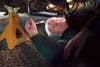
by John B. Carnett
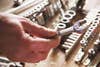
Tools of the Trade
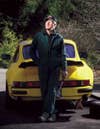
Gold Plated
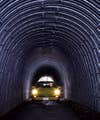
Gold Plated