Conferencing in the Car
The latest innovation in talking while driving
We may earn revenue from the products available on this page and participate in affiliate programs. Learn more ›
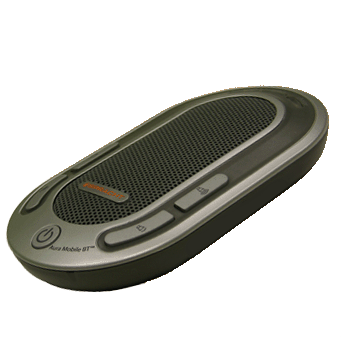
Driving around while seemingly talking to an imaginary friend in the front seat is no longer strange, and in California, it’s the law. But “hands-free” can still be painful for the other half of the conversation, and the ear you choose to clip a gadget onto. The Aura Mobile BT from Spracht is a Bluetooth conference phone that works just as well in the car as it does in your hotel room-turned-office. On a three-hour trek through northern California driving 80 mph in a noisy car, we tested whether it’s worth the $129.99 price tag.
Over the course of eight or so calls, there was universal agreement that the sound quality was better than putting a cell phone on speaker or the average Bluetooth headpiece. People on the other line could still tell it was on speaker, but the words didn’t appear chopped and there was no need to repeat constantly. Several felt that there was less ambient noise. A few key technical specs from Spracht:
- full-duplex (93%) operation for simultaneous two-way conversations without clipping
- multiple acoustic profiles, which are automatically adjusted based on the type of communication.
- full 3-wattamplifier
- dual speakers generating 95 dB
- noise-cancelling internal microphone at 44 db ± 4 dB
- 4 hours talk time on a single charge, standby time 24 hours
No software is necessary to get started, and the cell phone connected quickly and easily. A slick embedded visor clip deploys out of the speaker bottom for use in the car, ensuring you won’t lose some add-on accessory. The spring-loaded design collapses it back into the device for use on a table or desk. Placing calls still requires using the phone keypad, but maybe a voice-activated model will come next? Incoming calls ring quite loudly, but a slight disappointment was finding no ringer options. However, if the incoming call registers in your address book, the Aura Mobile will actually read out the name (so be careful with your nicknames). A car charger is included for long trips.
For corporate folks, the conference-room capability is also worth noting and probably justifies the cost. Putting a standard cell phone on speaker only works if everyone in the room is within six inches of the microphone. The Aura Mobile eliminates that need, and slips easily into your computer bag. It also functions with PCs or Macs for VoIP calls. So is it worth the $129.99? Tough to say, but it’s still hanging on our visor.